Time on the Job
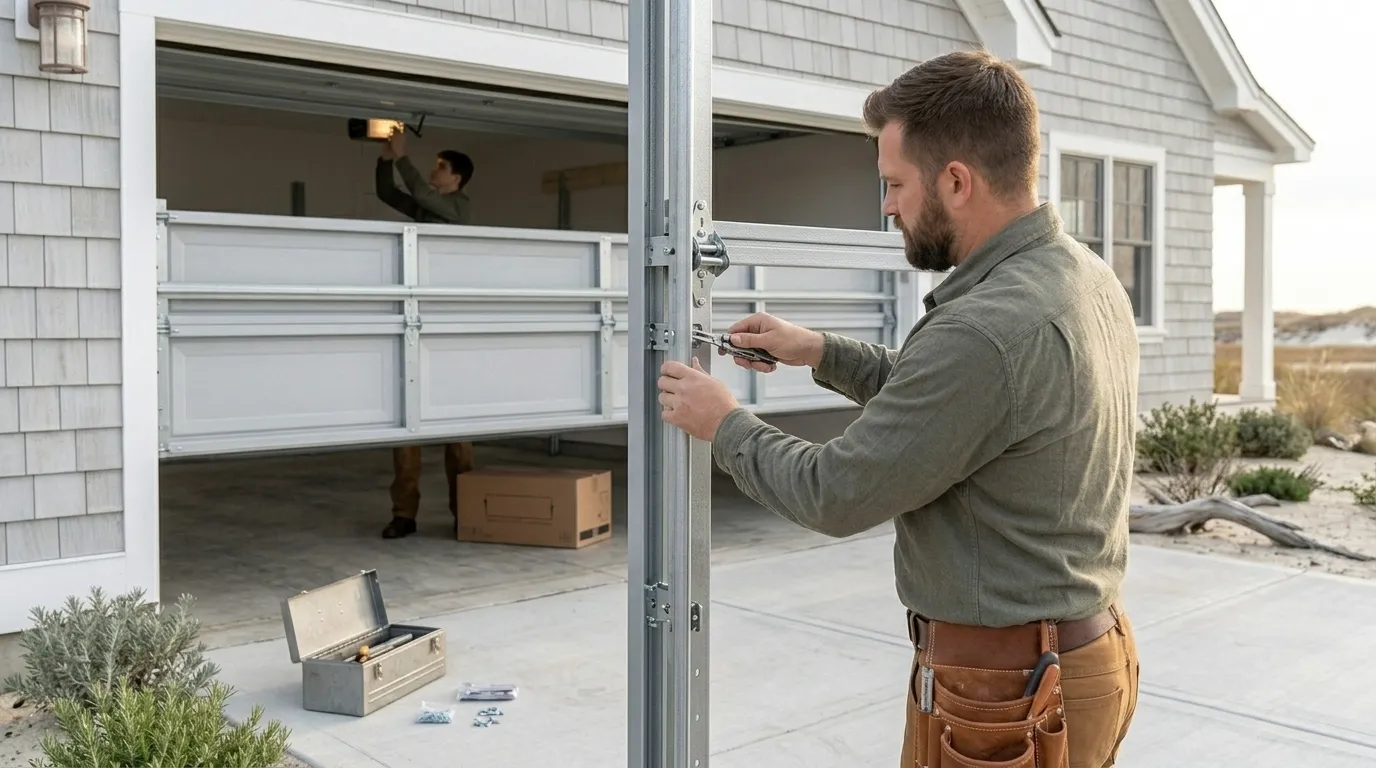
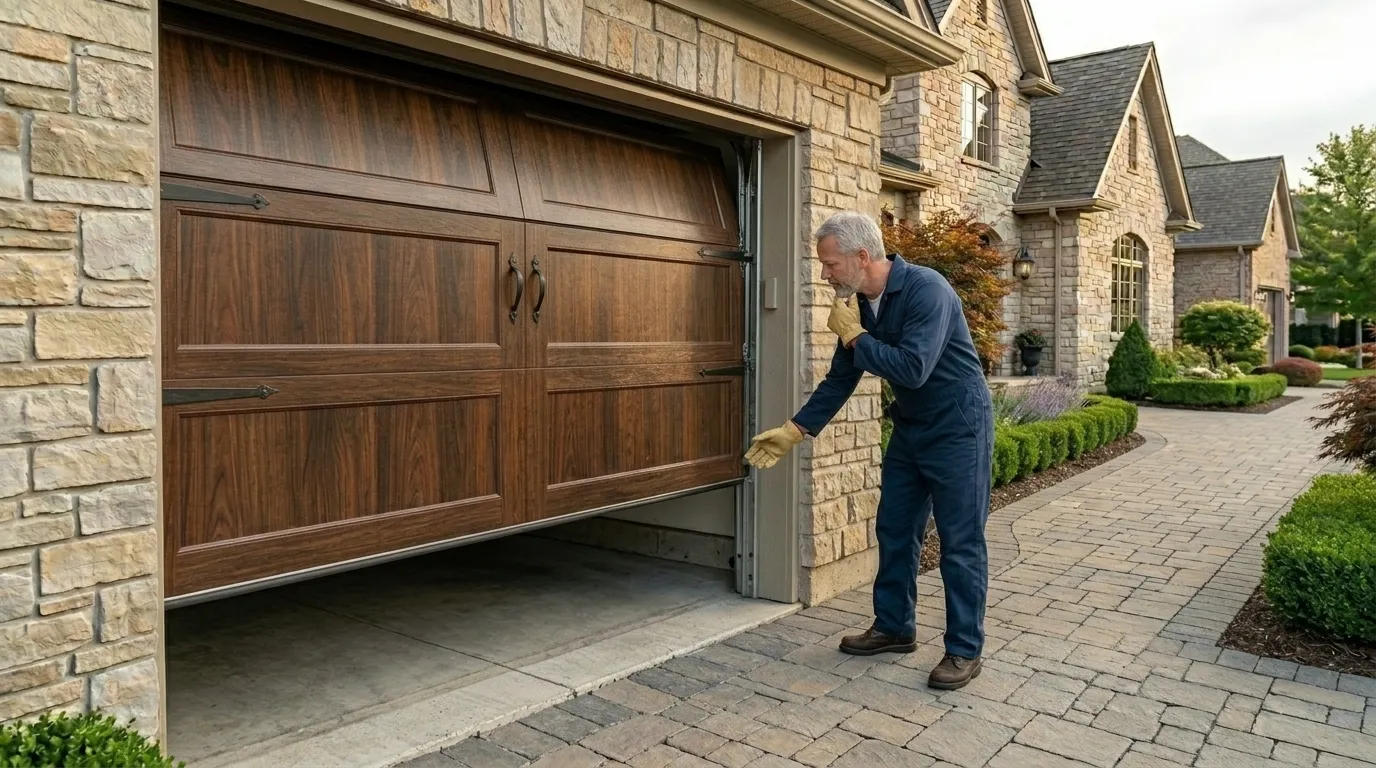
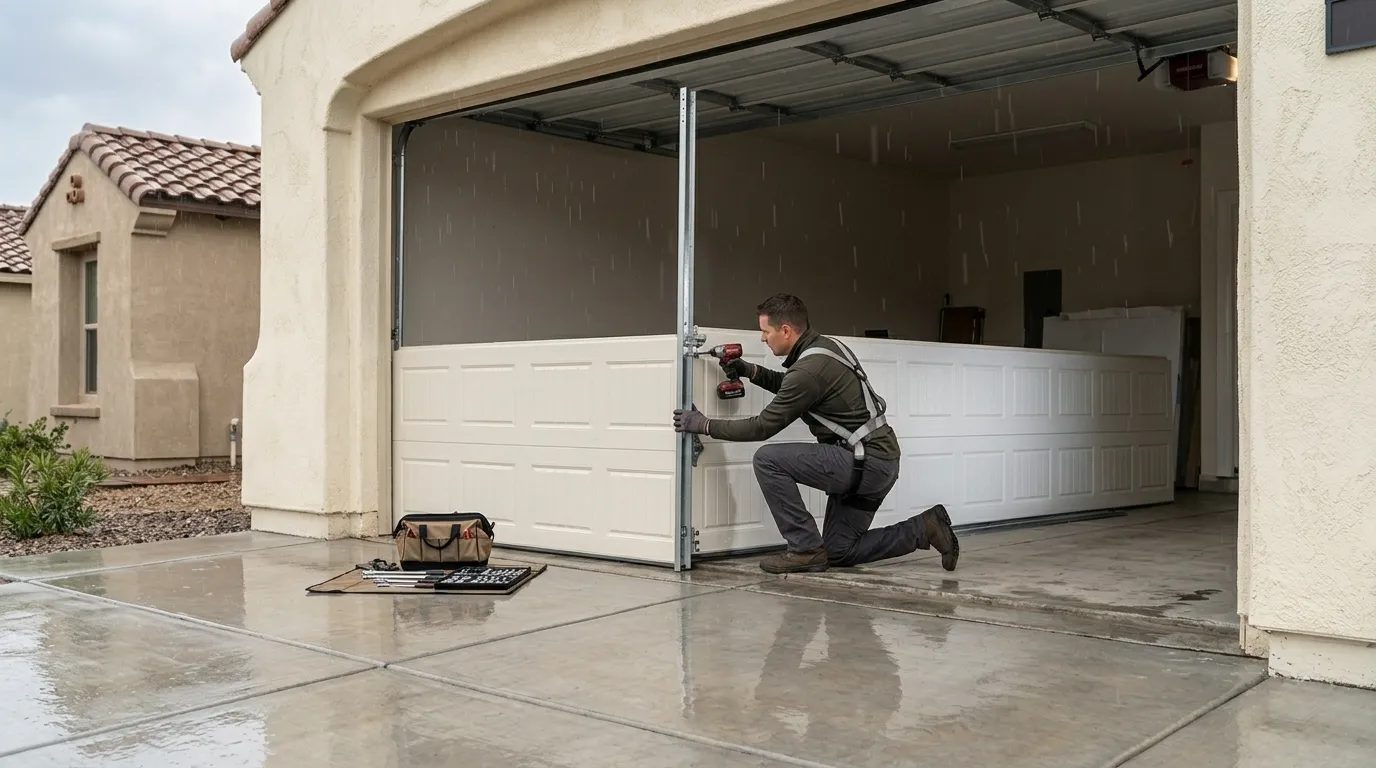
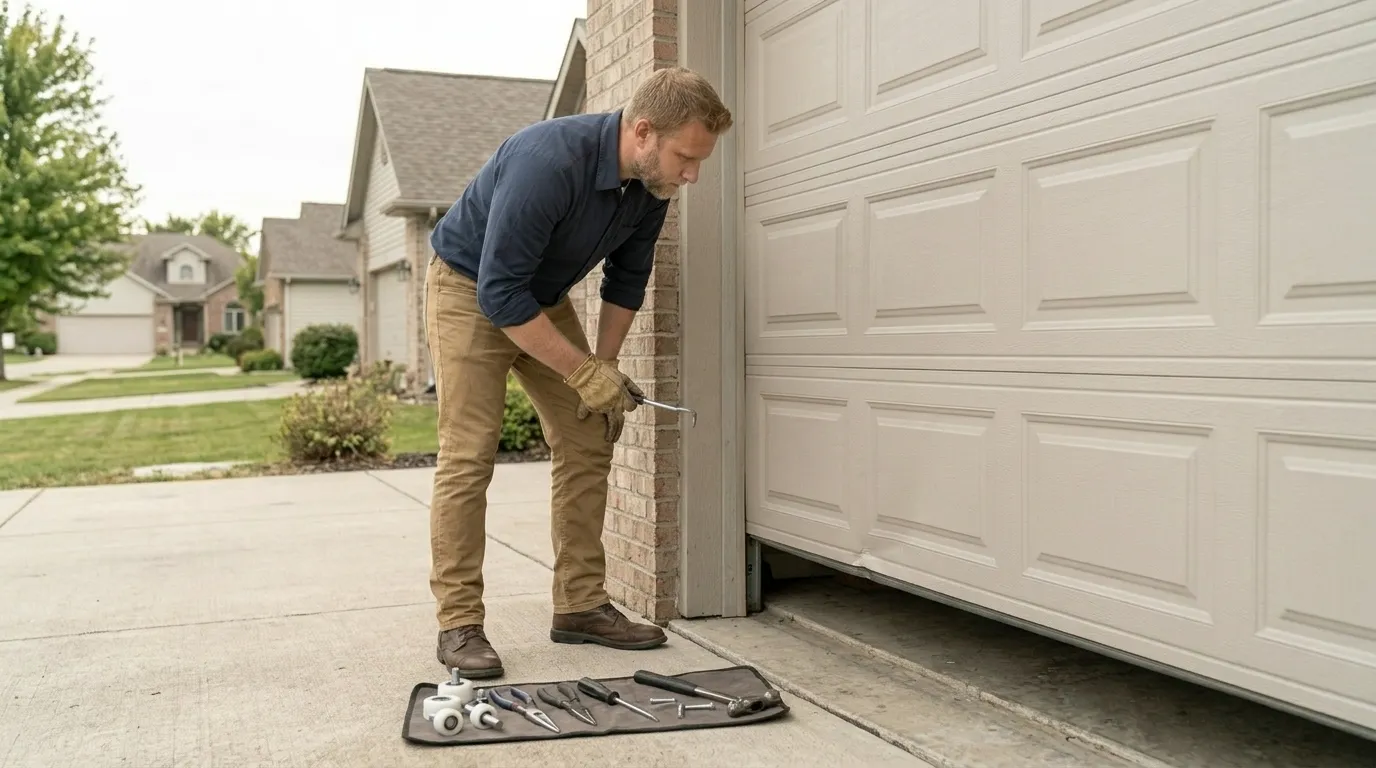
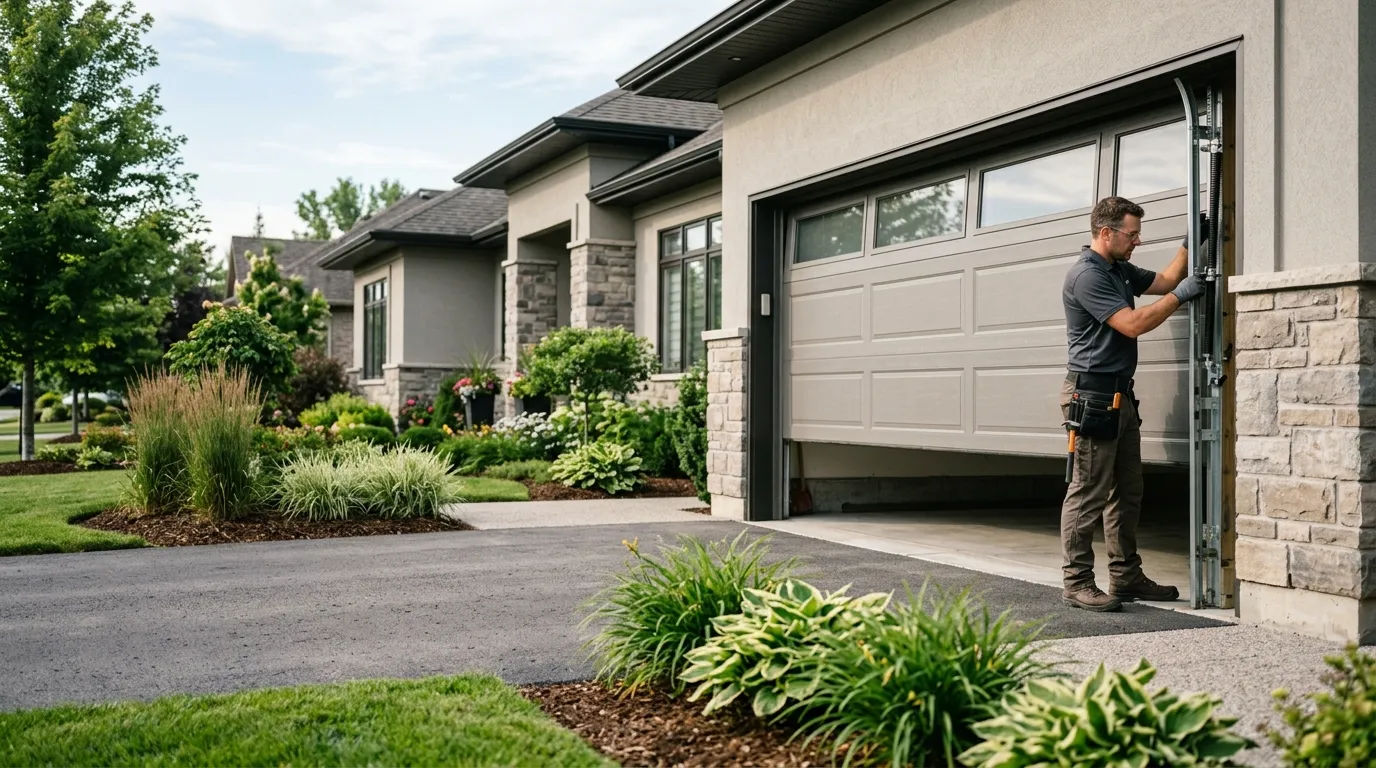
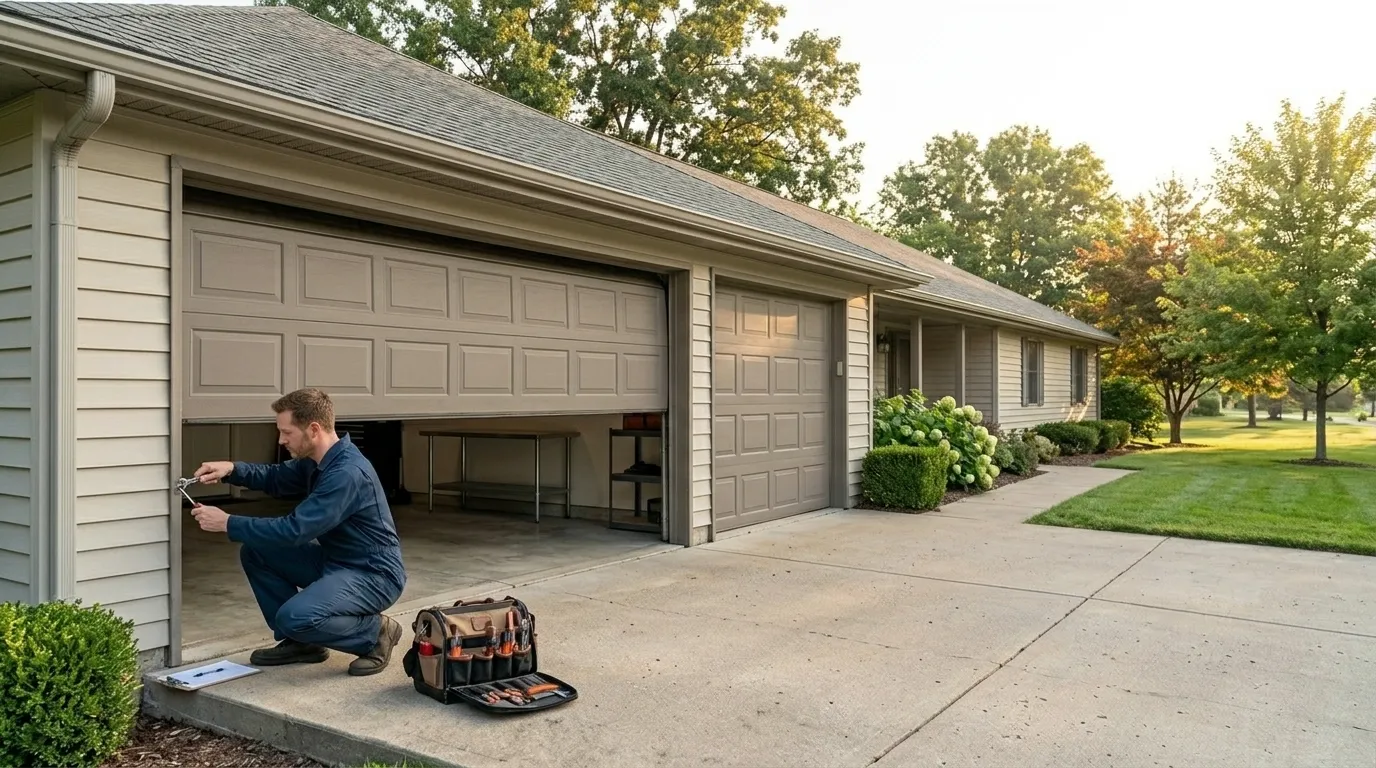
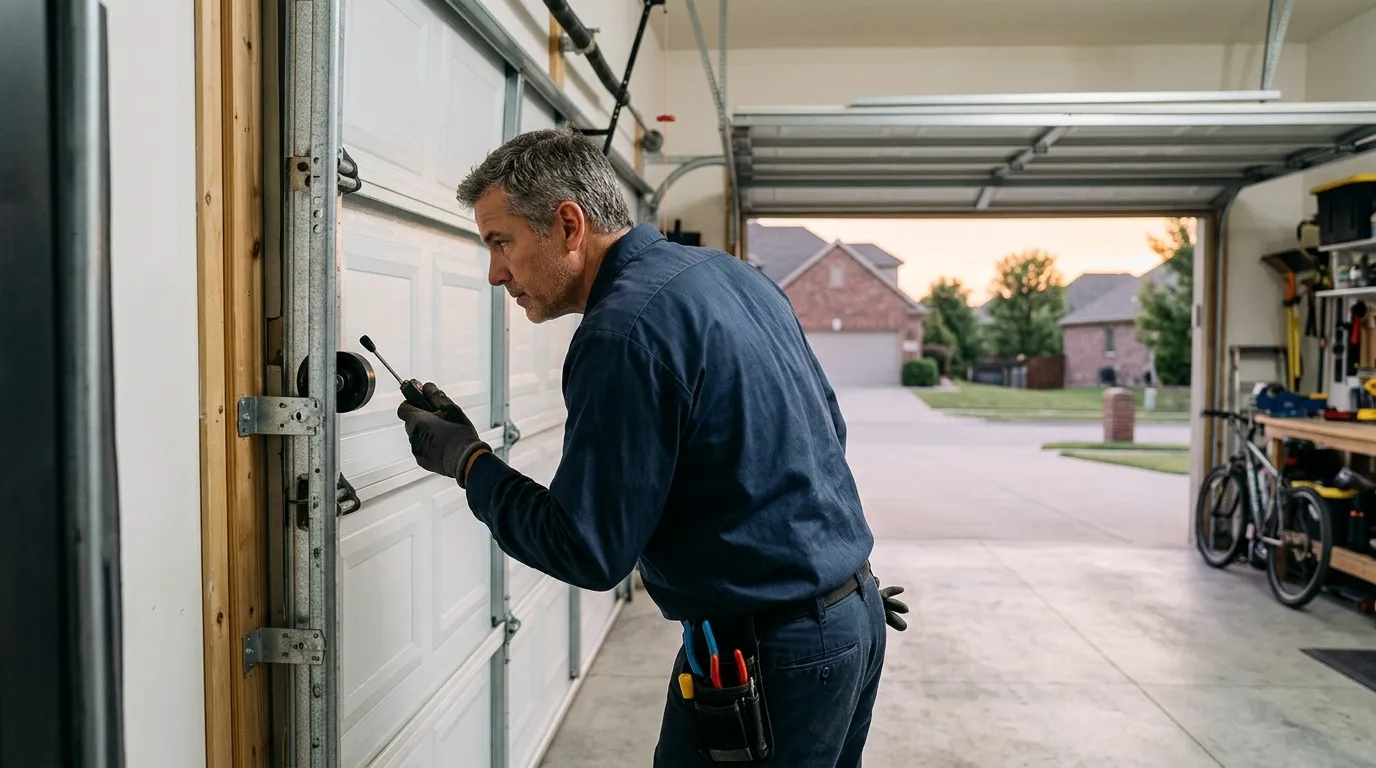
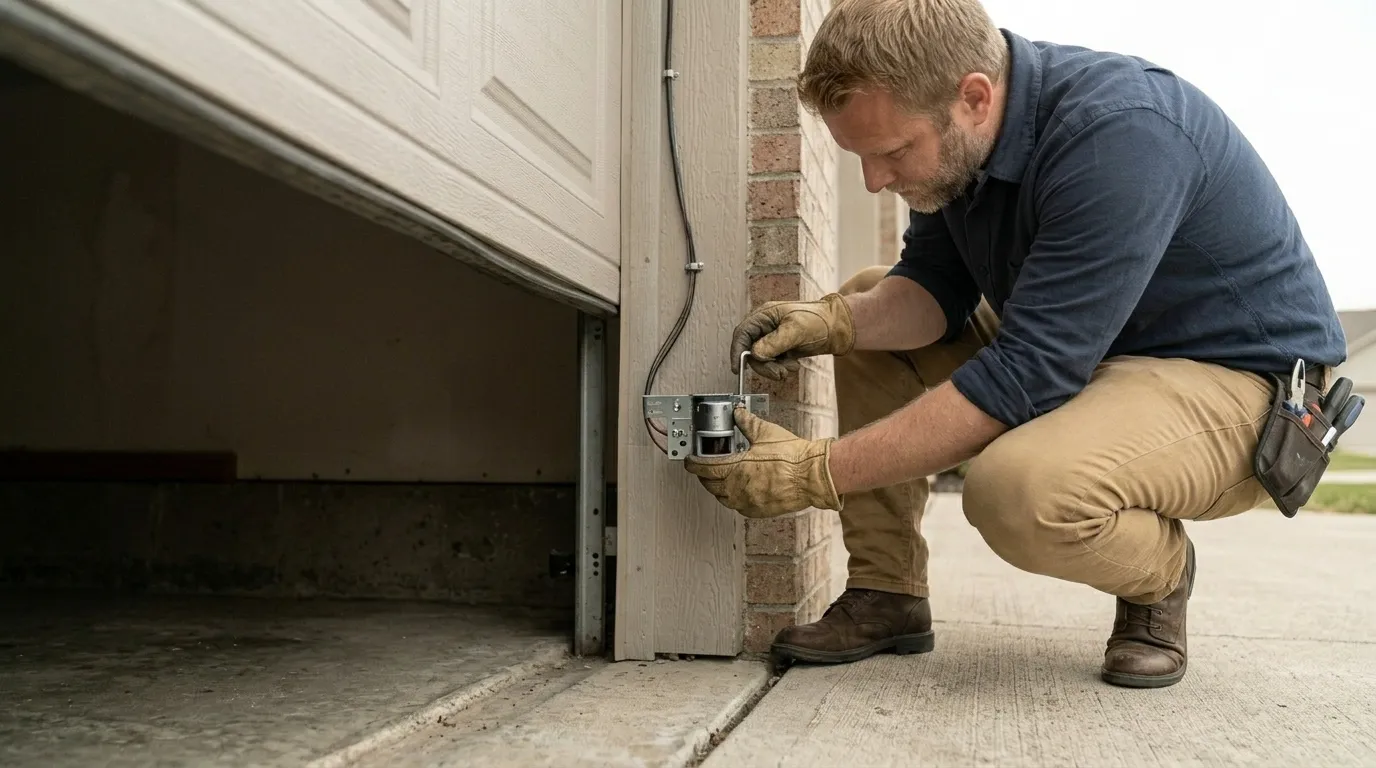
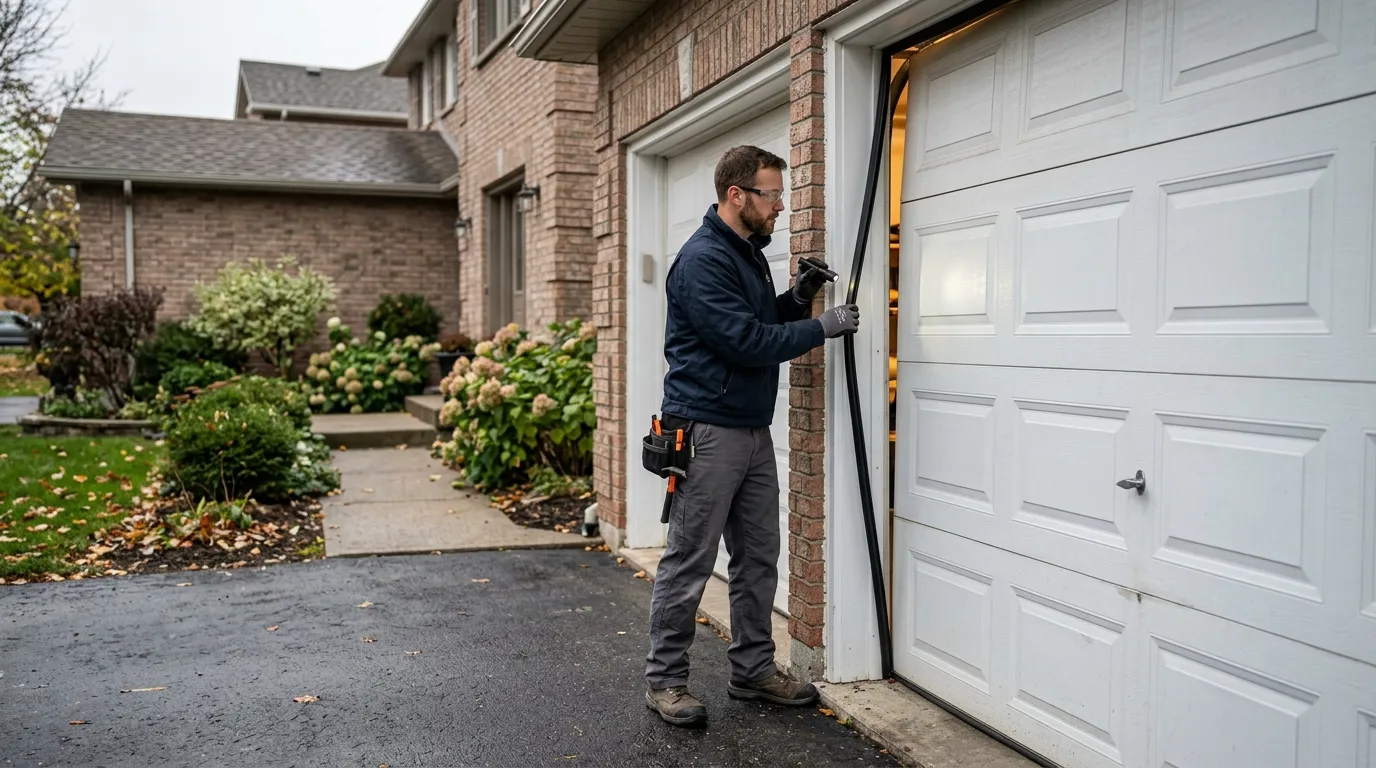
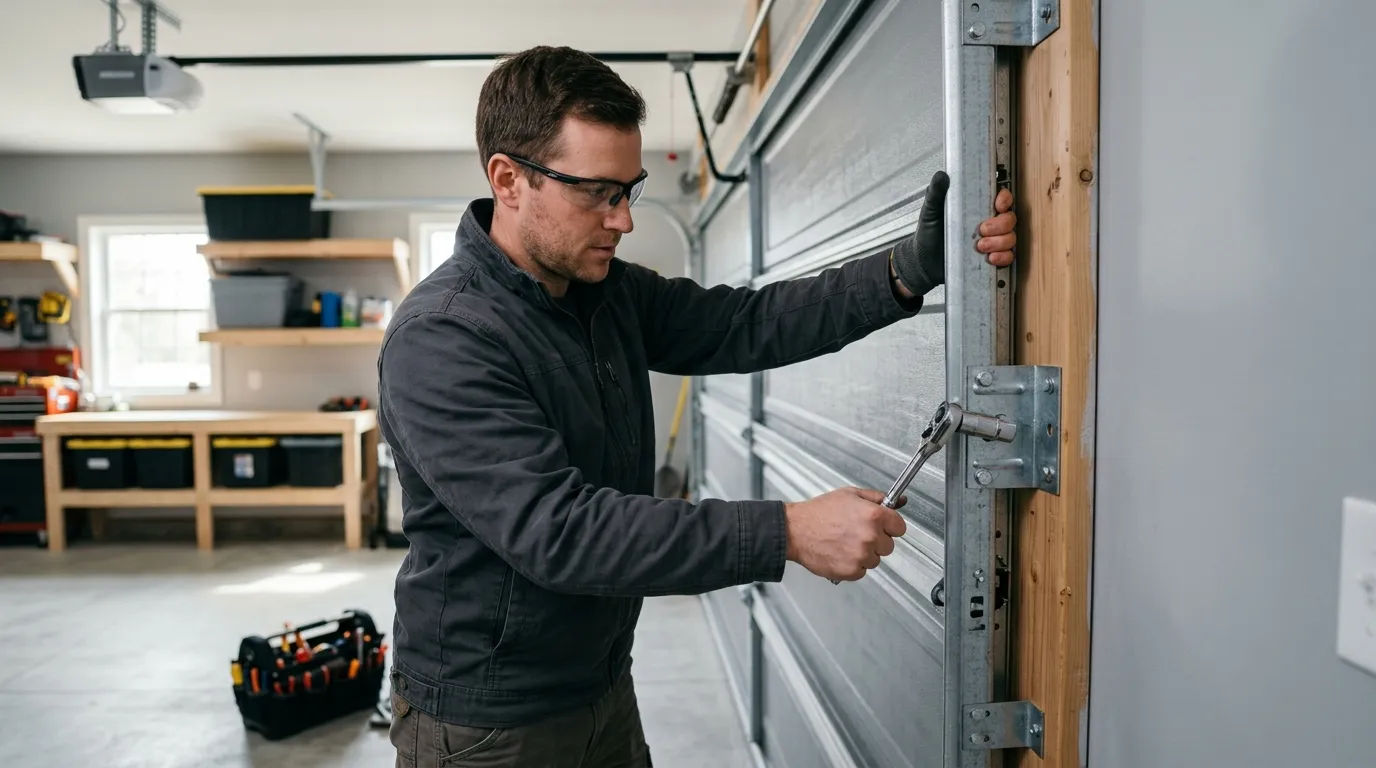
A straightforward off-track call - roller out of the track, track knocked loose from the wall, no bent rail - is usually a same-visit fix: reseat the rollers, resquare the track, retighten the brackets, run the door through a few cycles to confirm it tracks true. Where it runs long is when the track itself is bent, which happens more often on the doors from the 1969-2003 stock that make up most of this area's housing - the steel gauge and bracket spacing on those older tracks isn't what's used today, so a bent section sometimes means replacing the full track rather than straightening it.
We won't pretend every visit is quick. If a cable jumped the drum at the same time the door came off track - which does happen when one side drops hard - that's a heavier repair with the door under spring tension, and it takes longer to do safely than to describe.
Why This Fails Locally
This is a heat problem before it's anything else. Las Cruces sits in a severe heat band, and the metal in a garage door track expands and contracts through punishing daily swings for months at a time. Lag bolts back out of studs, track brackets loosen a fraction of a turn at a time, and a door that tracked fine in March starts fighting its rails by August. That slow loosening is invisible until a roller finally slips clear.
It's also an age-of-housing problem. Housing across the seven areas we cover - a band that runs from Mesilla and University Park through Radium Springs, Mesquite, Vado, and out toward White Sands - was mostly built in the 1980s and 90s, with the broader stock dating 1969 to 2003. Doors and track hardware installed during that build-out are past the point where brackets hold like they did new. A house built in that window with its original track is carrying 20 to 50 years of thermal cycling on hardware that was never rated for it.
Put those two things together - old track, brutal heat - and off-track calls cluster in this area in a way that a newer, milder-climate suburb just doesn't see.