What Can Go Wrong
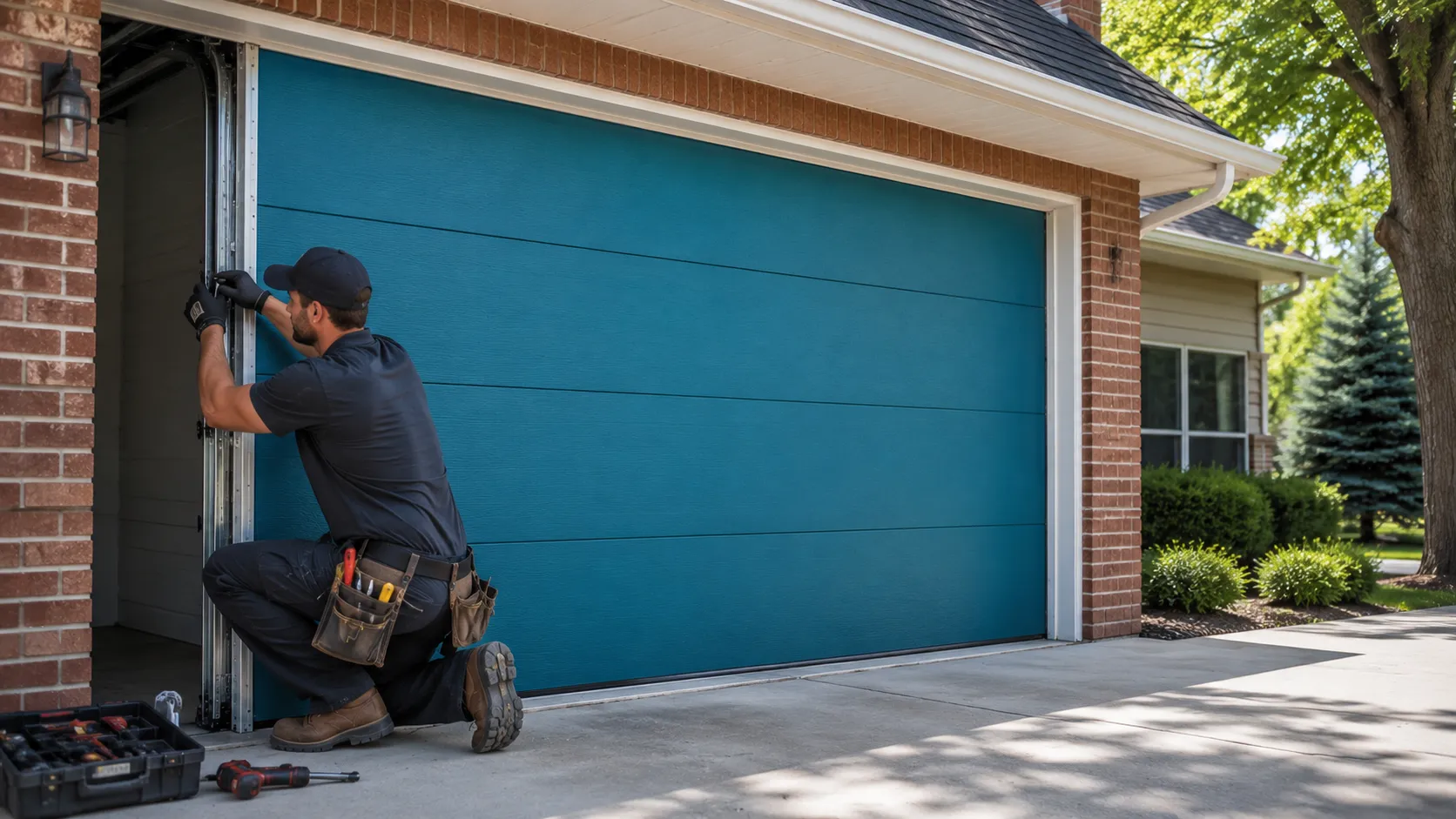
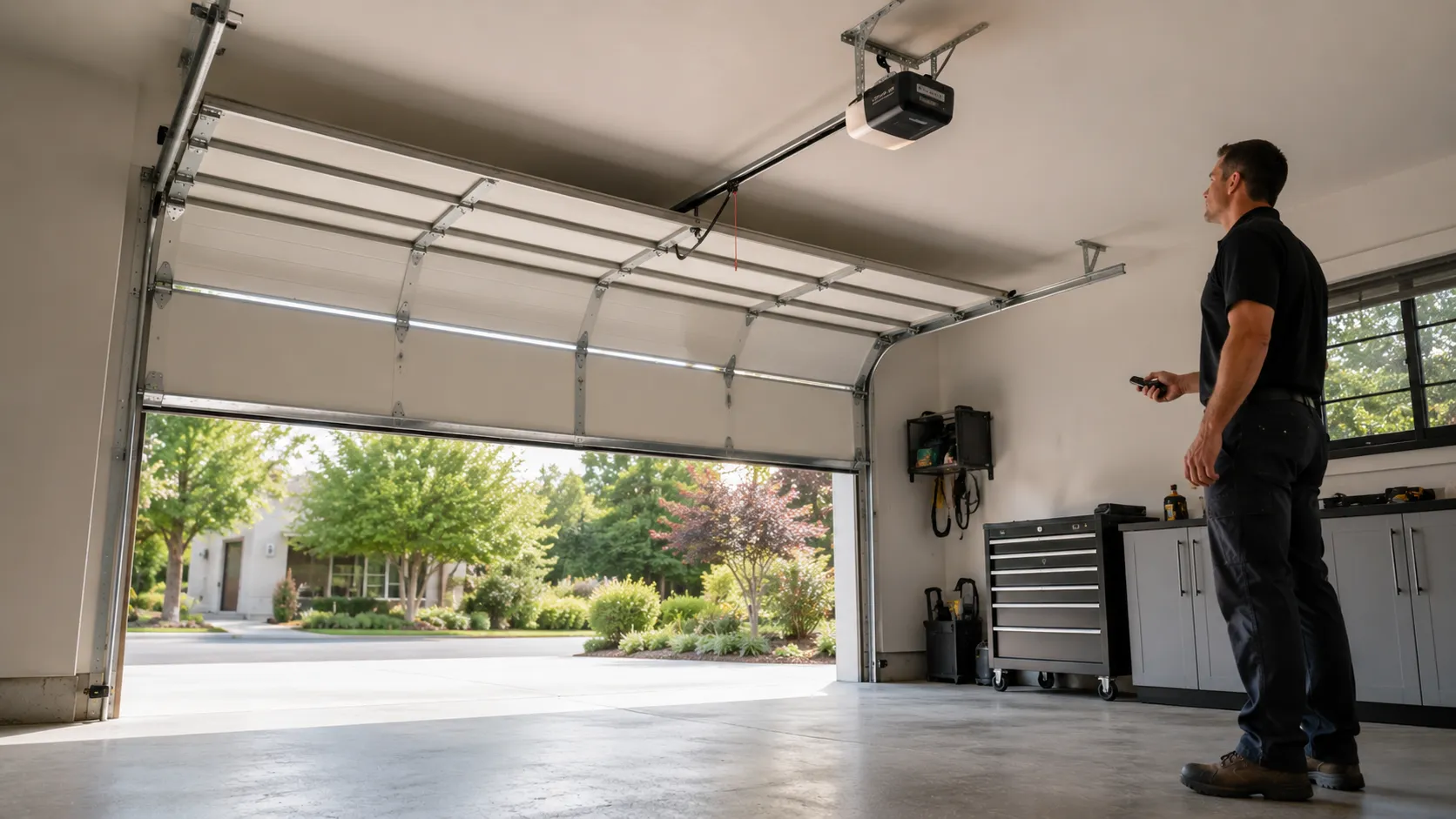
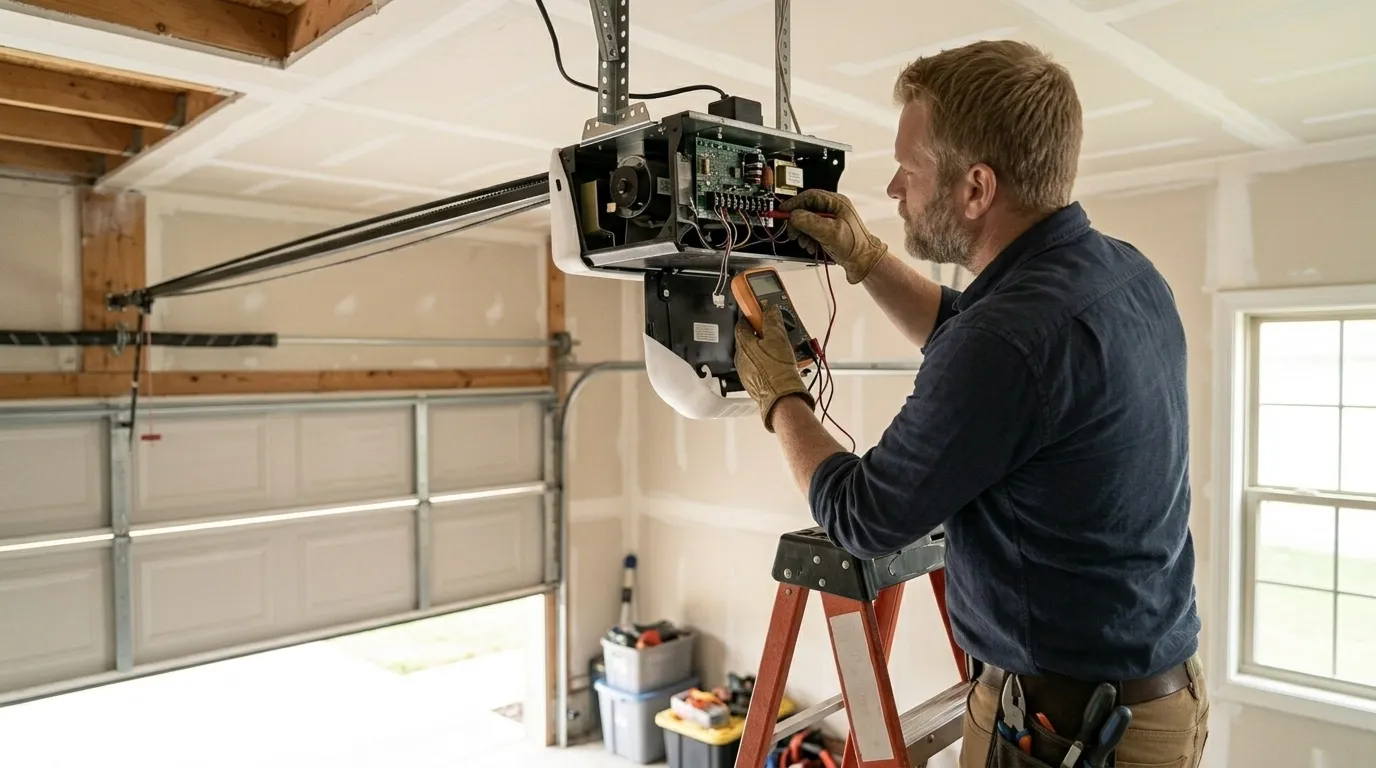
Once a roller jumps the track, a few things can happen depending on how far the door traveled before anyone noticed. The cable can bind against the drum, a panel can crease at the hinge, or the opener's travel limits can get thrown off enough that the door reverses on its own. None of that is exotic - it's what steel track and steel rollers do under repeated stress.
Heat is the other factor that doesn't get enough credit here. This part of the state carries a severe heat classification, and track sections mounted to the framing expand and contract through the day, every day, for as long as the house has stood. On a house built in the 1994 range, that's roughly thirty years of daily expansion cycles working on the same bracket screws. It's not dramatic, and it's not sudden - it's slow loosening that ends in a jump the first time the door takes a hard stop or a strong gust catches it half open.
The combination of newer, lighter hardware and long-term heat cycling is why we see more bracket failures than bent-rail failures in Mesquite compared to older, torsion-heavy neighborhoods in the district.
The DIY Question
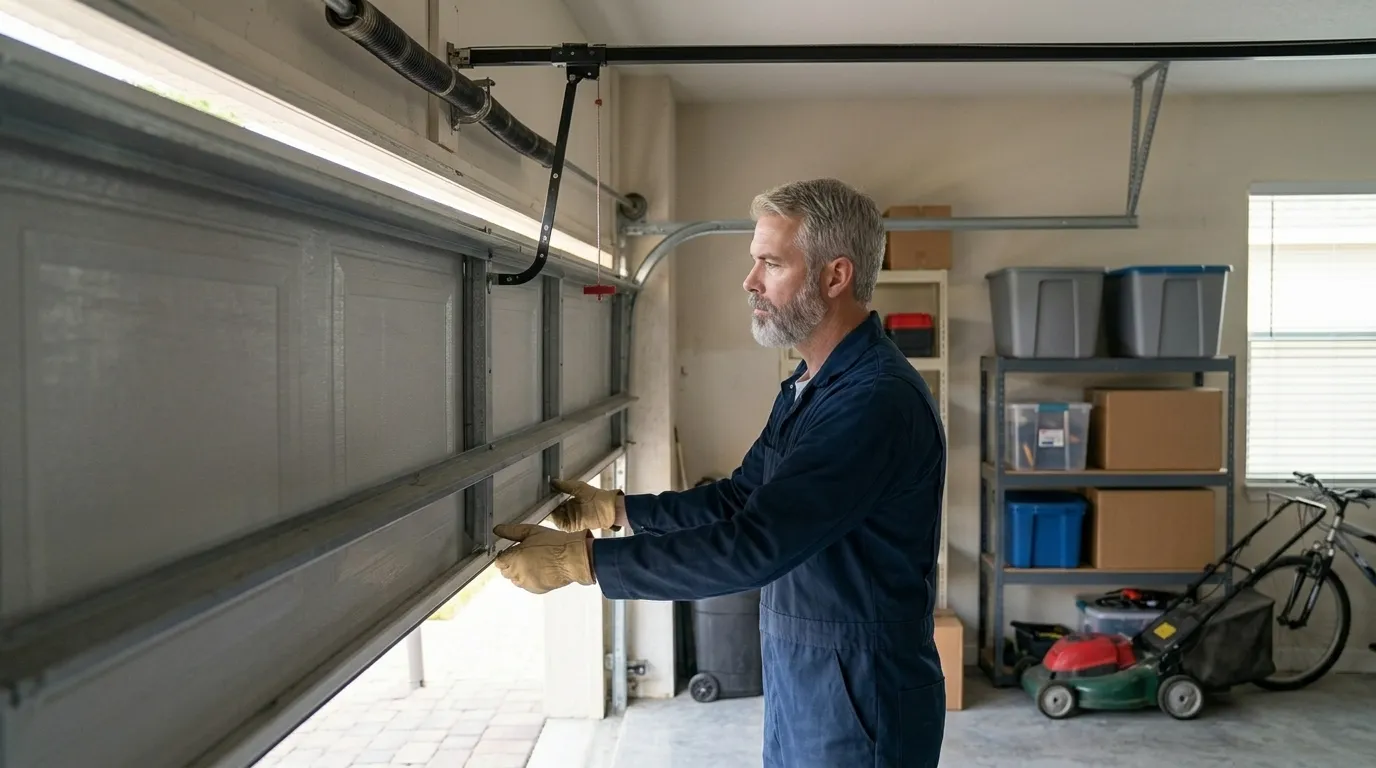
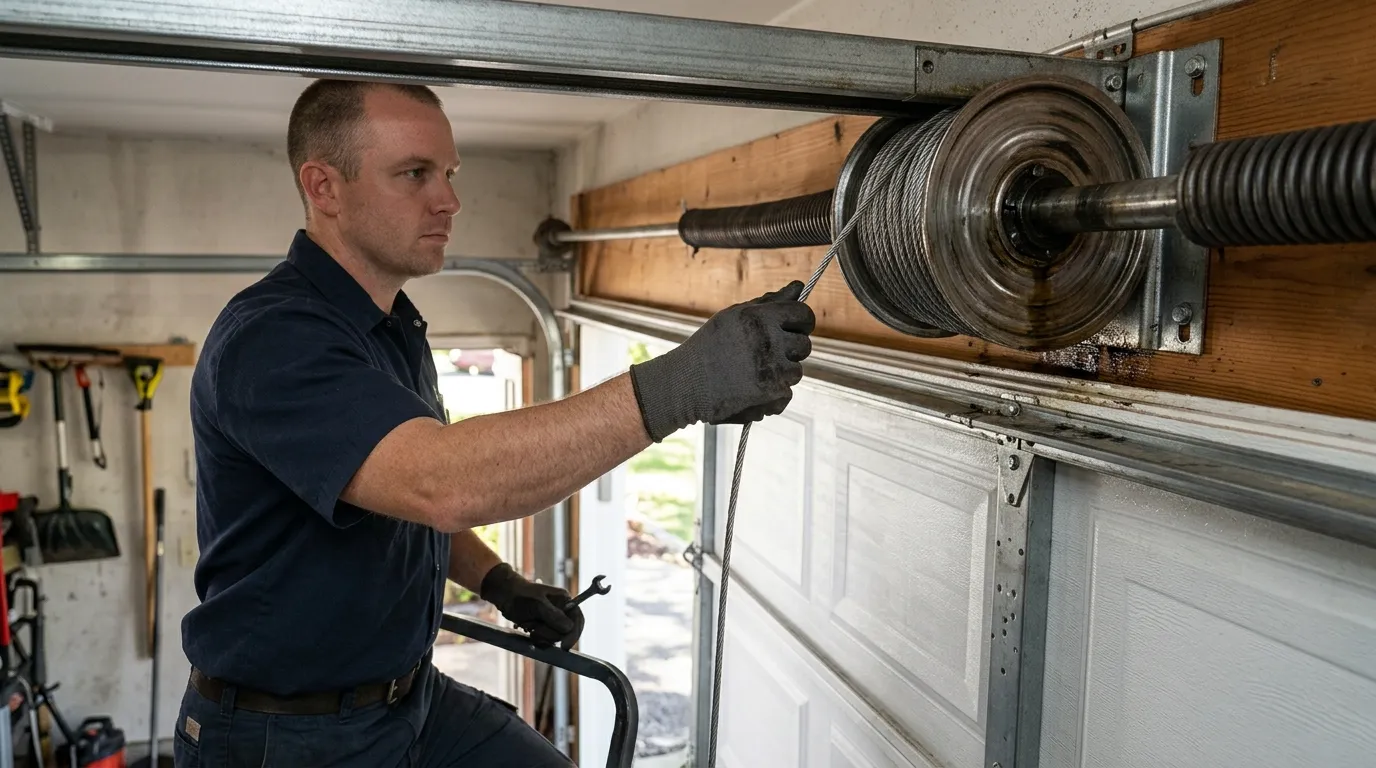
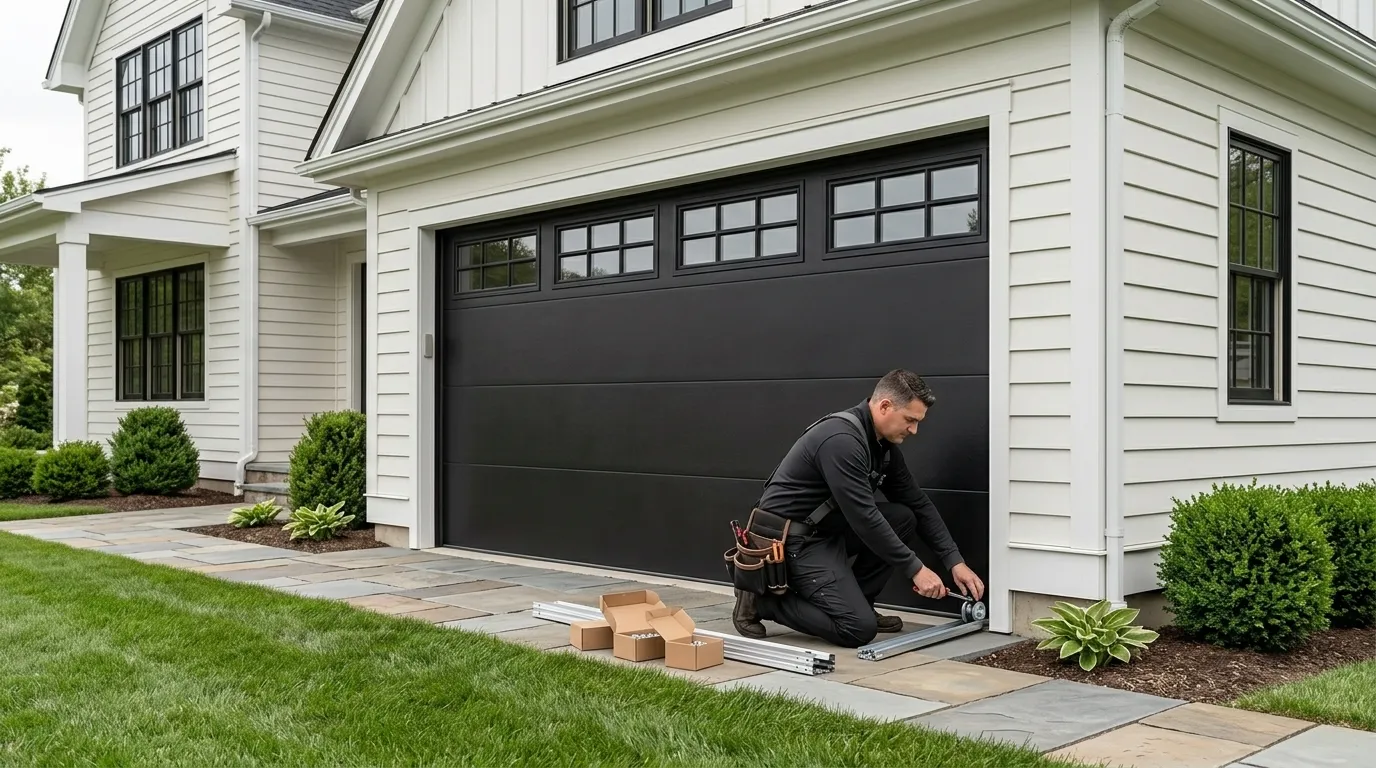
You can true up a track bracket with a level and a socket wrench if the door hasn't come fully off the rail and the panels aren't bent. That's a real DIY job for someone comfortable on a ladder. What you shouldn't do is force a door back onto the track while it's still under spring tension - extension springs store enough energy to hurt a hand badly, and there's no way to tell how much tension is left in one that's already jumped.
The other line we draw: if the track itself is bent, not just loose, bending it back rarely holds. Steel that's kinked once work-hardens at that point and will kink again in the same spot, usually within a season. At that point you're buying a new section of track, and it's a smaller job to do it right than to keep re-bending the old one every few months.
Honest limitation: we can't tell you over the phone whether a bracket reset or a full track swap is the fix. That call depends on how far the rail bent and whether the panel took damage, and we won't guess at a price before we've seen it.
Stocked Parts
We carry the parts that fail most on this kind of door: nylon and steel rollers, track sections in standard widths, cable, and the brackets that hold track to framing. Those cover the great majority of off-track calls without a special order.
What we don't always have on the truck is a matched replacement panel for an older door - if a section cracked when it came off the rail, sourcing the right panel can take longer, especially on a door old enough that the original run is discontinued. Mesquite's newer stock cuts down on that problem some; with a median build year around 1994, most doors here are still a common enough width and style that parts aren't a struggle, unlike some of the older single-car doors elsewhere in the service area.
At $68,330, median household income here runs well above the roughly $50,000 figure for the broader area, and it shows in the calls: more owners choose a full roller-and-track swap done once over a string of patch visits. For more on garage doors in Mesquite generally, see our Mesquite garage doors page.