What Can Go Wrong
Heat is the other factor working against a 1990s-era opener out here. This area sits in a severe-heat climate band, and a motor that's spent close to thirty summers in an uninsulated garage has had its lubricant cook down, its capacitor weaken, and its gears run drier than they should. The failure usually isn't dramatic - it's a motor that hums and doesn't lift, or a unit that runs the belt/chain but stalls halfway up.
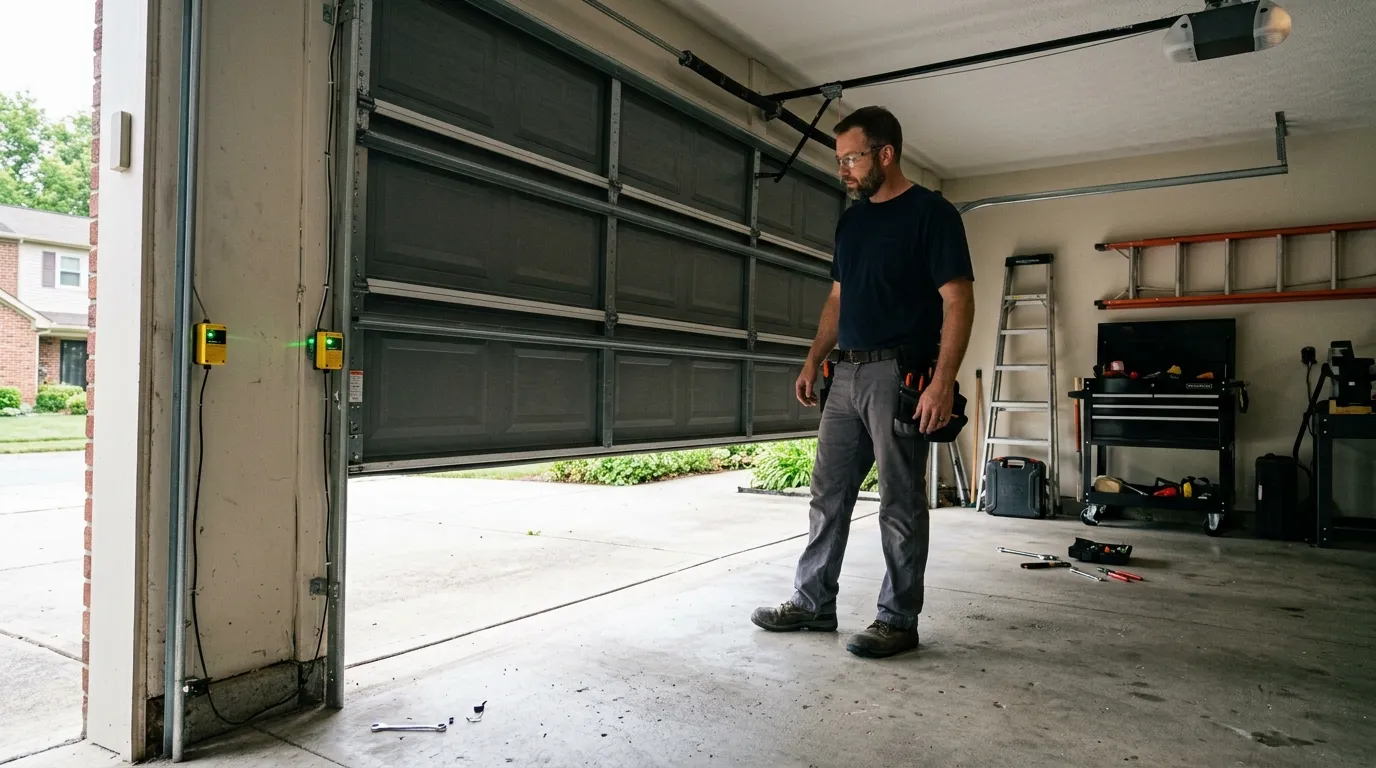
The other common issue is the safety sensors. If your opener predates 1993's federal reversing-sensor mandate, or has sensors that were installed but knocked out of alignment years ago and never fixed, you're running a door with no photo-eye protection at all. On a household budget in this area, where median income runs around $68,330, replacing the opener outright is usually a better use of money than patching a thirty-year-old motor that's going to need another part next year anyway.
The DIY Question
A boxed opener from a home center comes with instructions that assume a standard bracket setup and a door in good working order. Neither is guaranteed on a house this age. The header bracket, the arm connecting the opener to the door, and the wiring to the wall switch were all sized and run for whatever unit was original - and that hardware is often bent, undersized for a heavier replacement door, or wired in a way that doesn't match a modern opener's low-voltage terminals.
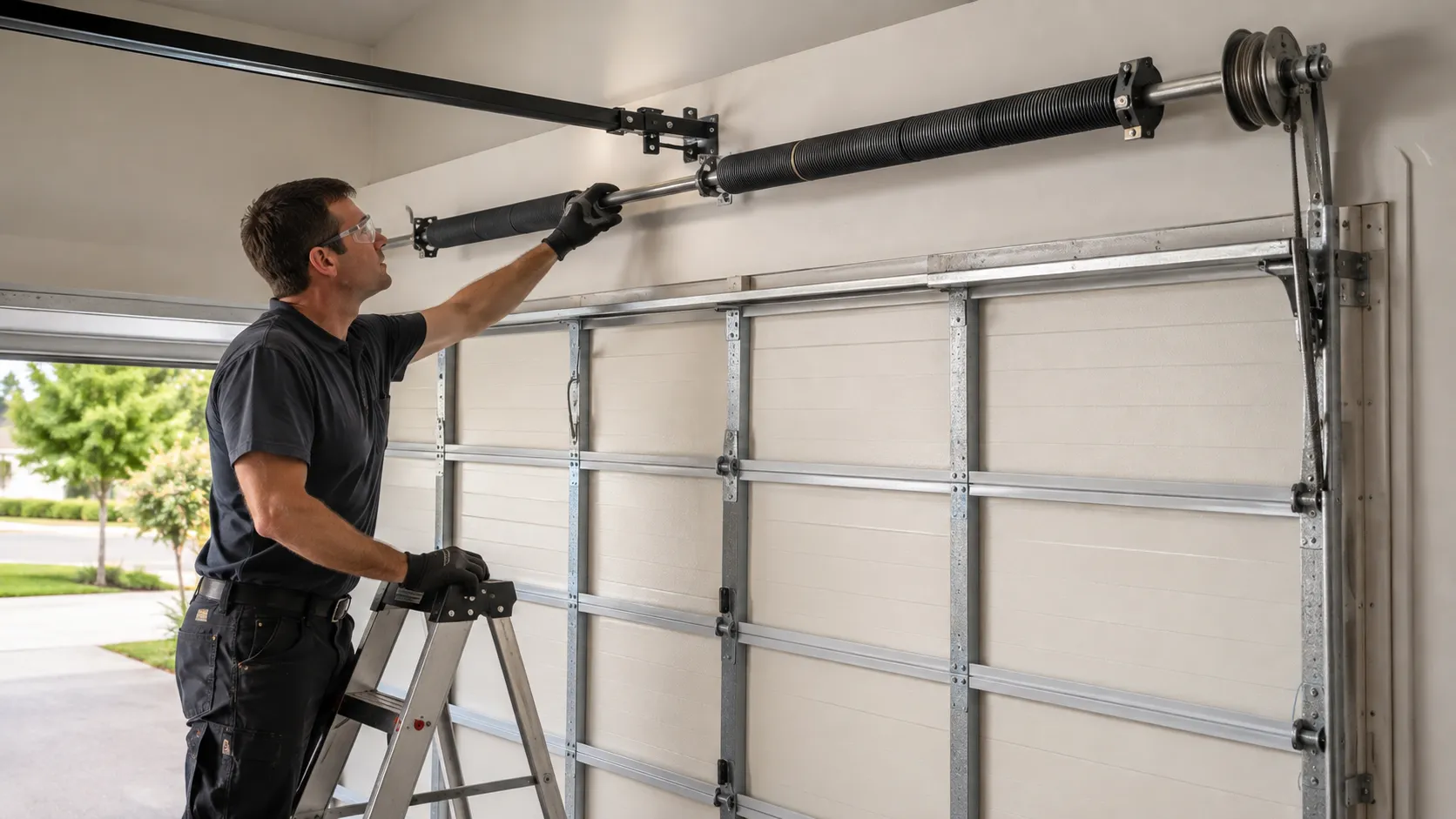
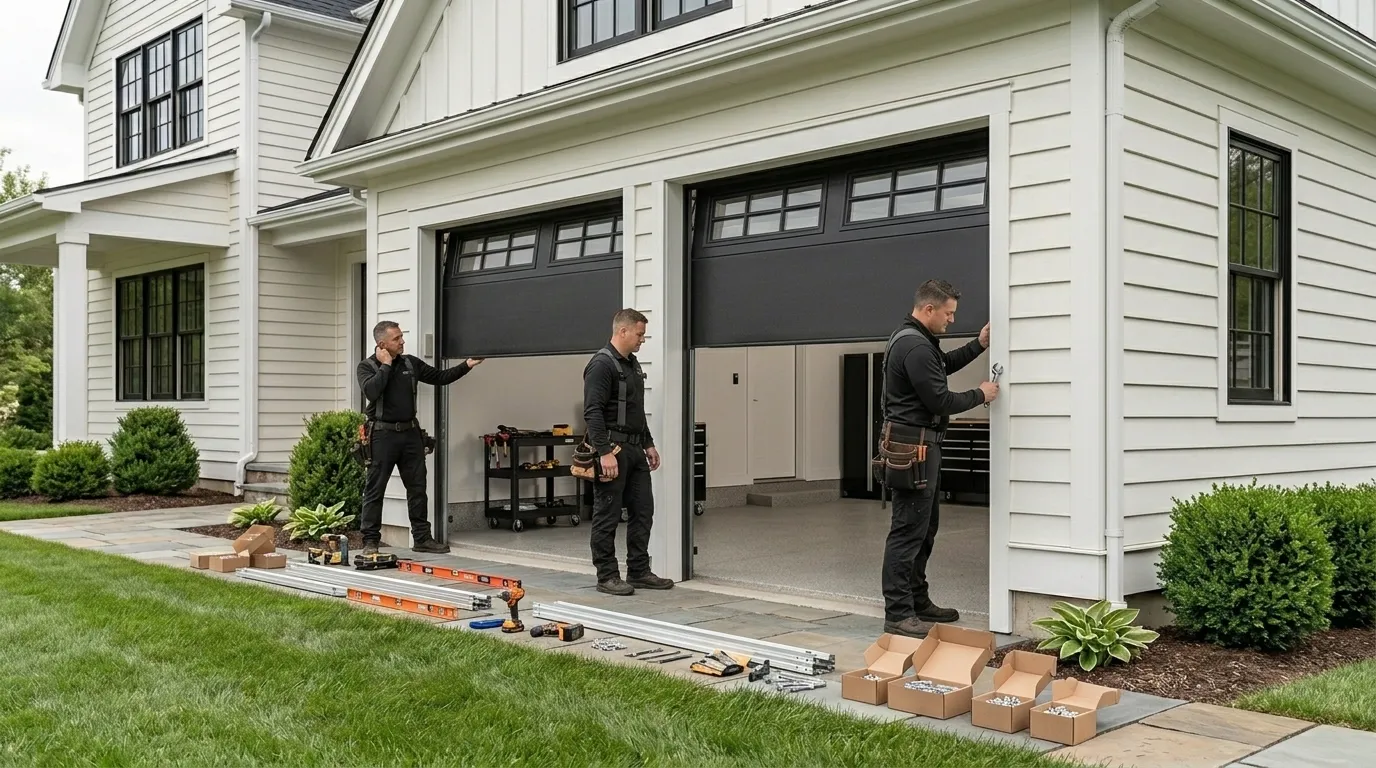
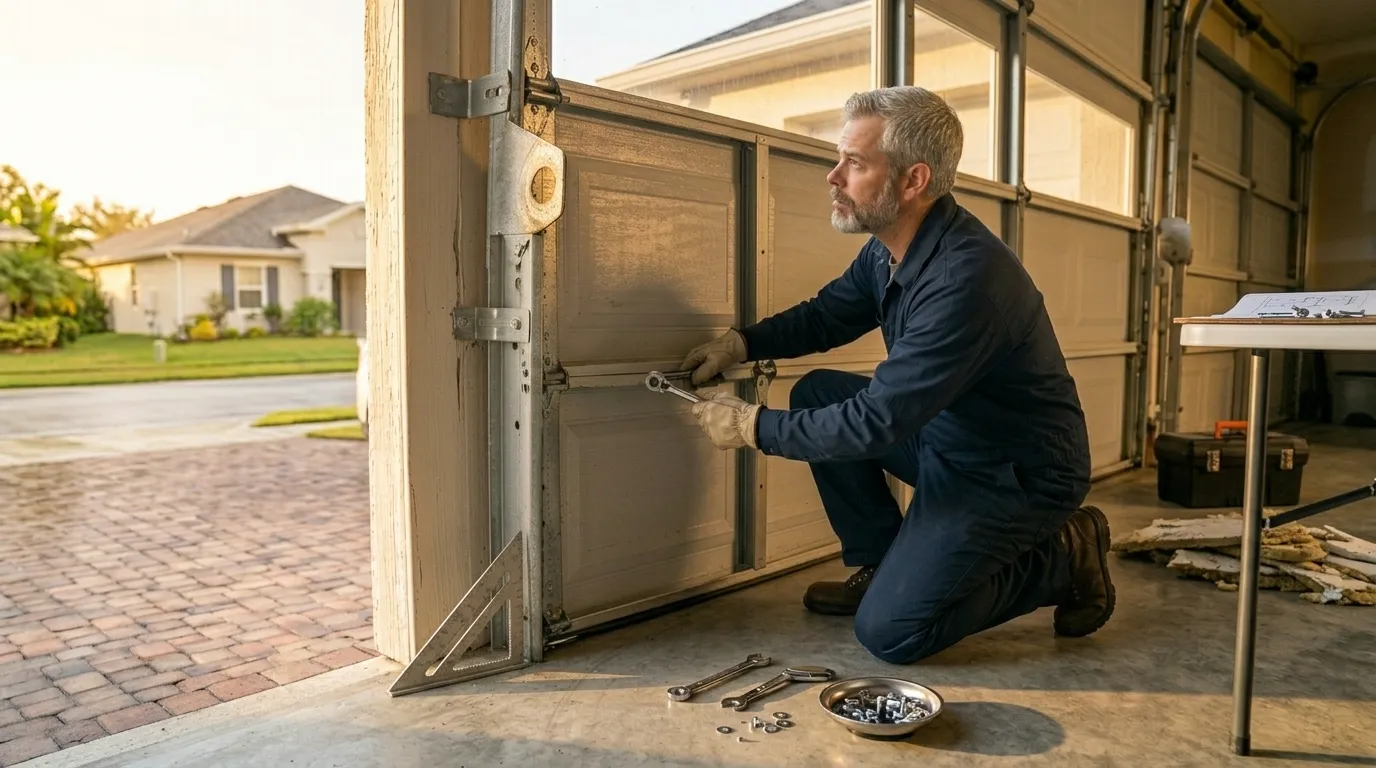
We won't tell you it can't be done at all. Plenty of homeowners install their own opener successfully. But if the door itself hasn't been inspected in years - springs, cables, rollers - bolting a new motor to old hardware just moves the failure point somewhere else. We travel from Las Cruces, about 12 miles, and when we're out for an opener job we check the rest of the door's hardware before we hang anything new on it.
Stocked Parts
For openers, we carry the common chain-drive and belt-drive units and the standard safety sensors that fit most residential setups, including the kind of aging photo-eye brackets you'll find on a house from the 1994 build era. What we don't keep on hand are proprietary remotes or wall-console parts tied to a single legacy brand that stopped making replacement pieces years ago - those sometimes need to be special-ordered, which can add a few days.
Given that most of Mesquite's 302 households are in the same rough age bracket of home, we see the same handful of failure points repeatedly: worn drive gears, dead capacitors, and sensors that were never reset after a bump. That repetition means we're rarely guessing when we show up, but it also means we're honest when a part isn't something we carry that day.