Garage Door Repair for University Park's 1973-Era Homes
University Park homes date mostly to 1973, meaning original steel doors and older extension springs. We cover repairs and replacements from our Las Cruces base, 4 miles out.
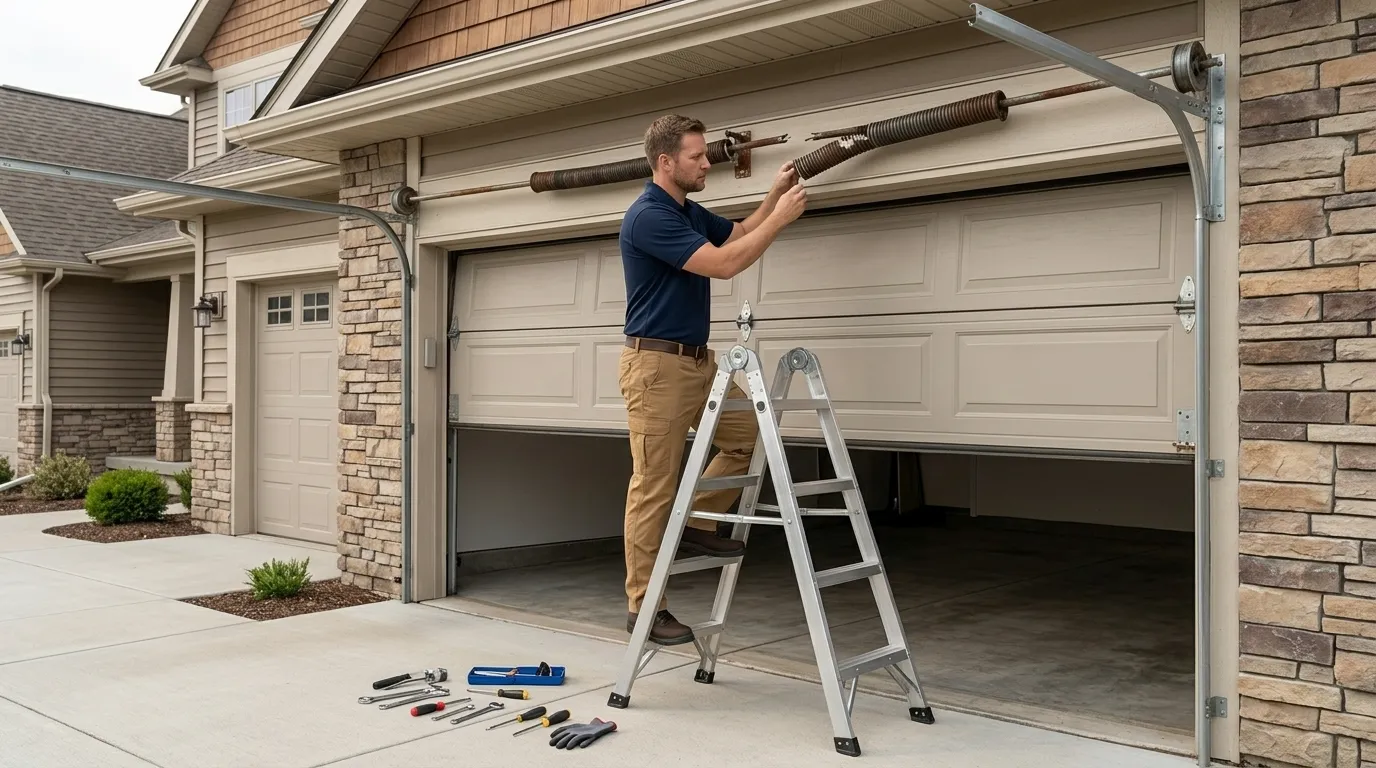
Most houses in University Park went up around 1973, and that one number tells you most of what breaks. A door from that era is almost always steel, single-layer, with extension springs mounted along the horizontal track rather than a torsion bar over the header. Those springs stretch and snap without much warning, and when one goes on a two-car door, the opener usually strips its gears trying to lift the dead weight alone.
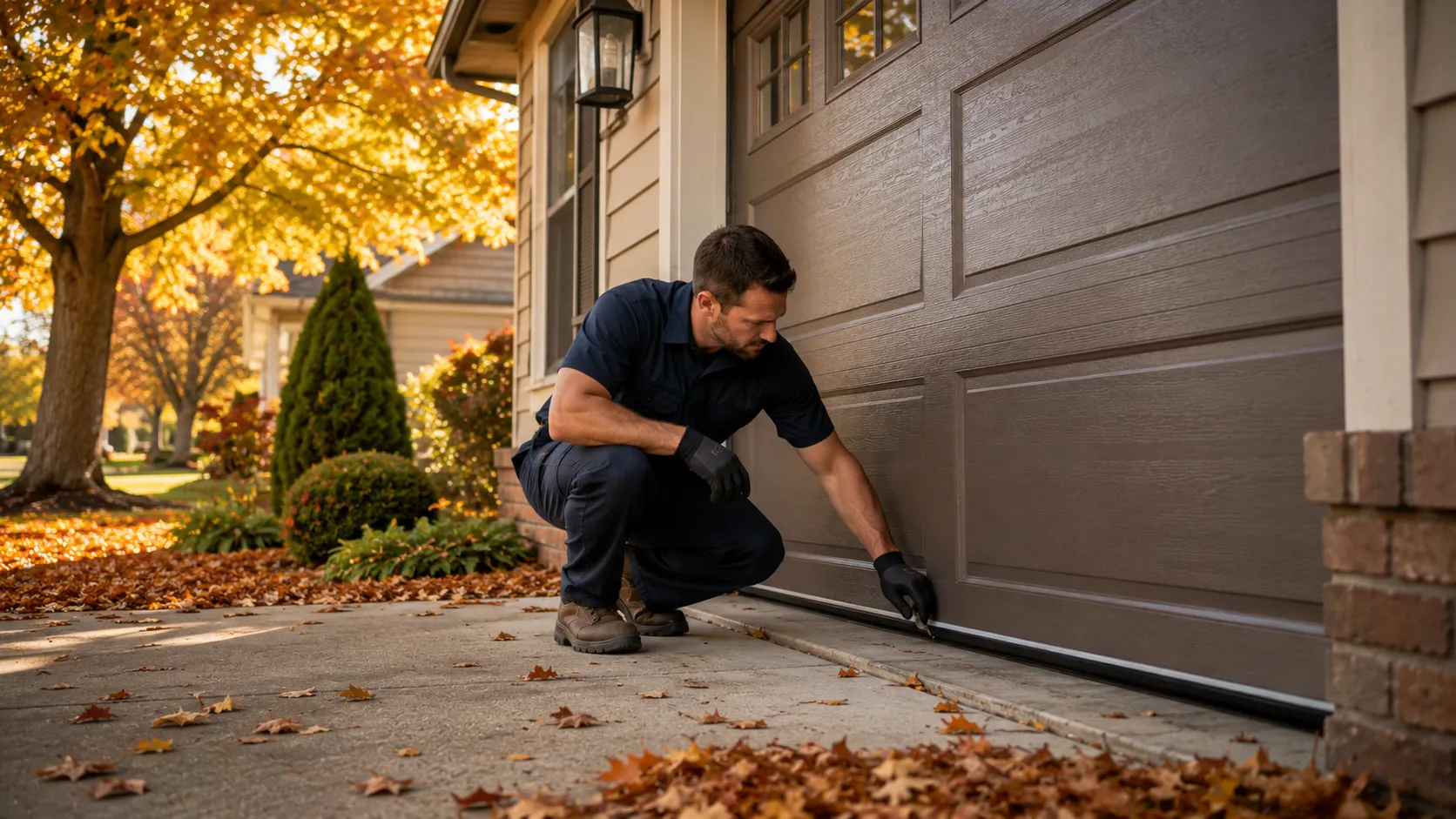
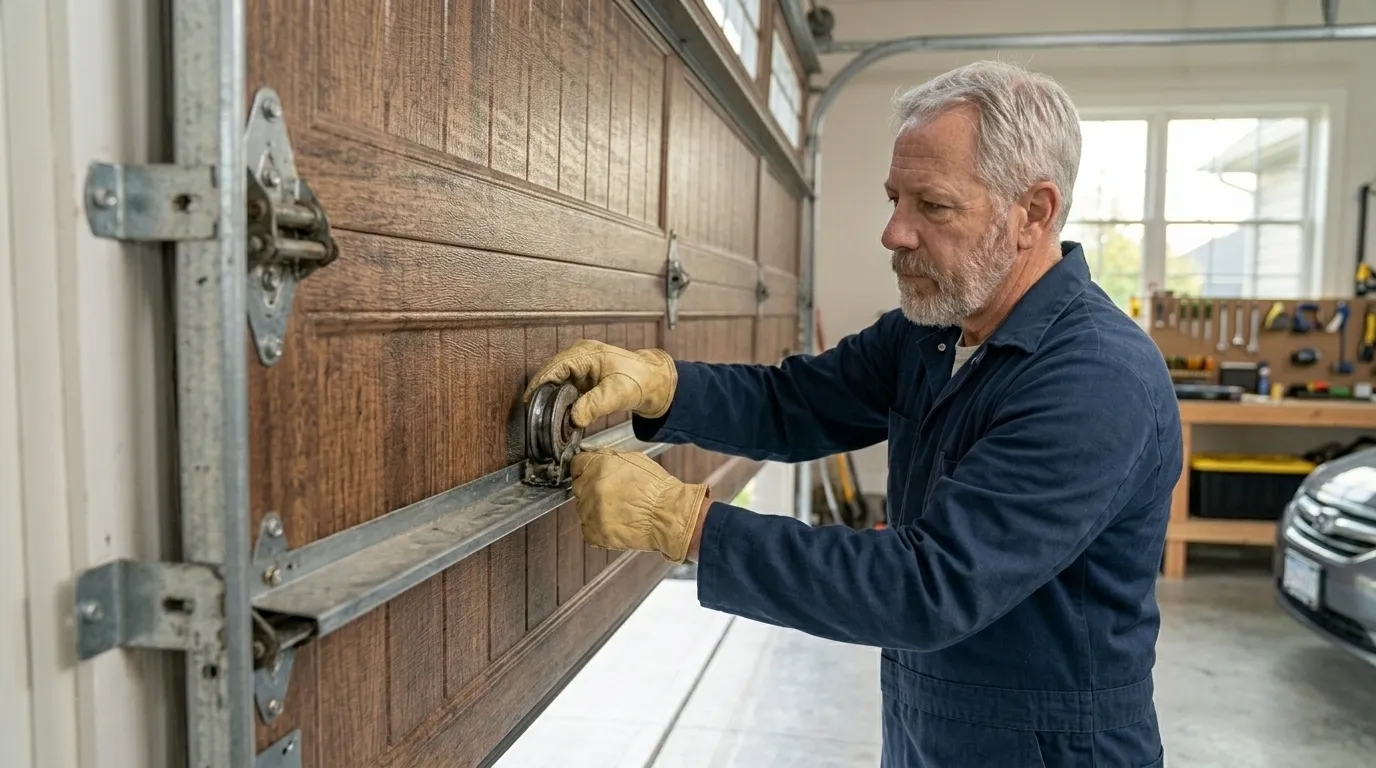
Heat is the other half of the problem. This region sits in a severe heat band, and on a house built in 1973 the weatherstripping and the original nylon idler pulleys have had five decades of summer to dry out and crack. We see cracked pulley wheels and brittle bottom seals more than almost anything else on doors this age. Panels can warp too, especially on the sun-facing side, which throws the whole door out of square in the track.
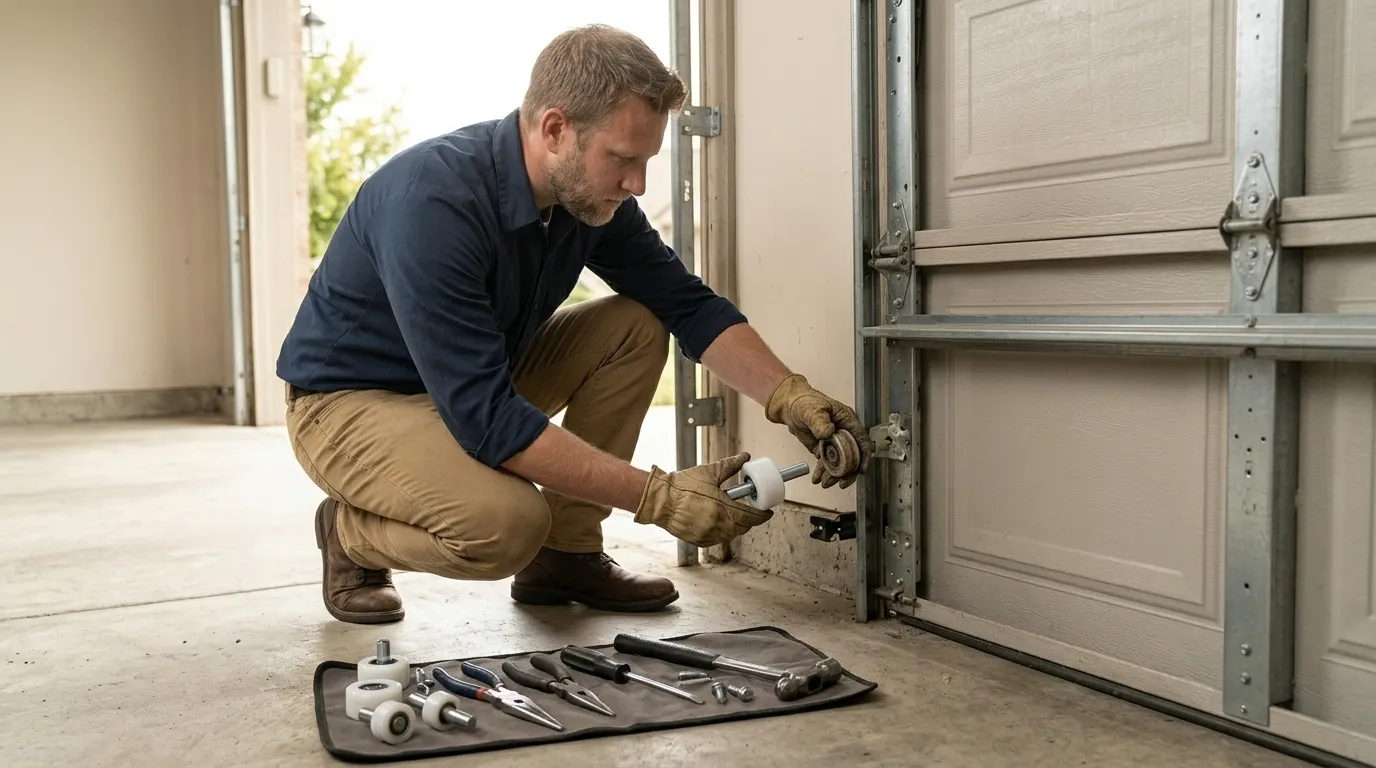
One thing we won't do is sell you a new opener when the fix is a $30 pulley or a re-tensioned spring. If the door still tracks straight and the panels aren't rusted through, repair almost always beats replacement on a house this size.
Booking a Visit
University Park sits about 4 miles from our Las Cruces base, so a call here doesn't mean waiting on a distant crew. We travel out for both repair and full replacement work, same as we do for Mesilla close by.
When you call, tell us the age of the house if you know it and what the door is doing - won't open, opener runs but nothing moves, door hangs crooked. On a home from the early 1970s, that's usually enough for us to bring the right spring size and pulley stock on the truck instead of making a second trip.
We don't keep a branch office in University Park itself. Every job here is dispatched from Las Cruces, which keeps our overhead down and, we think, keeps prices fair for a neighborhood where the median household income runs well under the wider service area's.
How We Fix It
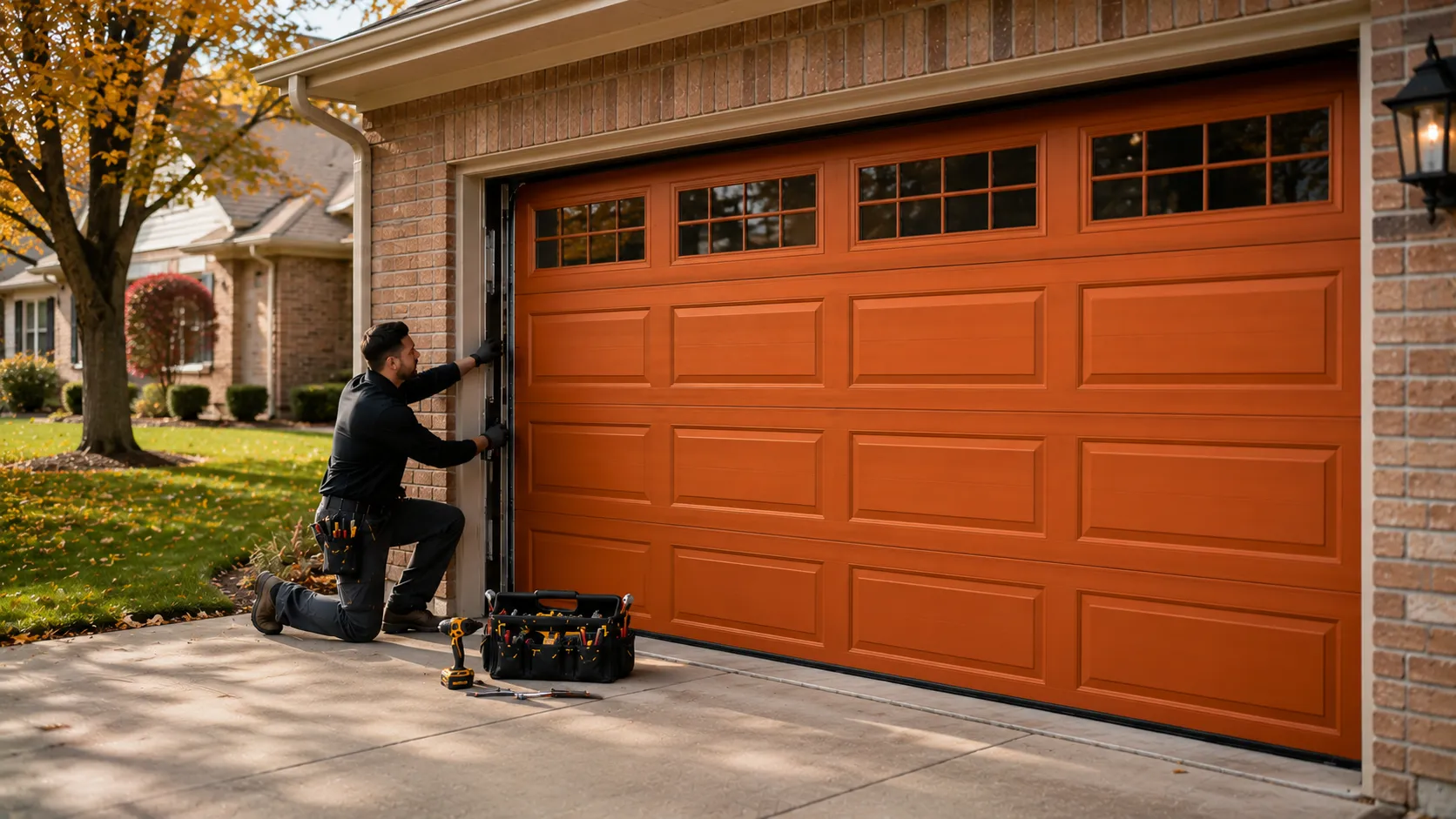
On a 1973-era door, the first thing we check is spring type, because extension springs and torsion springs get repaired differently and neither one is safe to guess at. If it's extension springs - the common setup for this build year - we replace both as a pair even if only one broke, since the surviving spring is carrying the same fatigue.
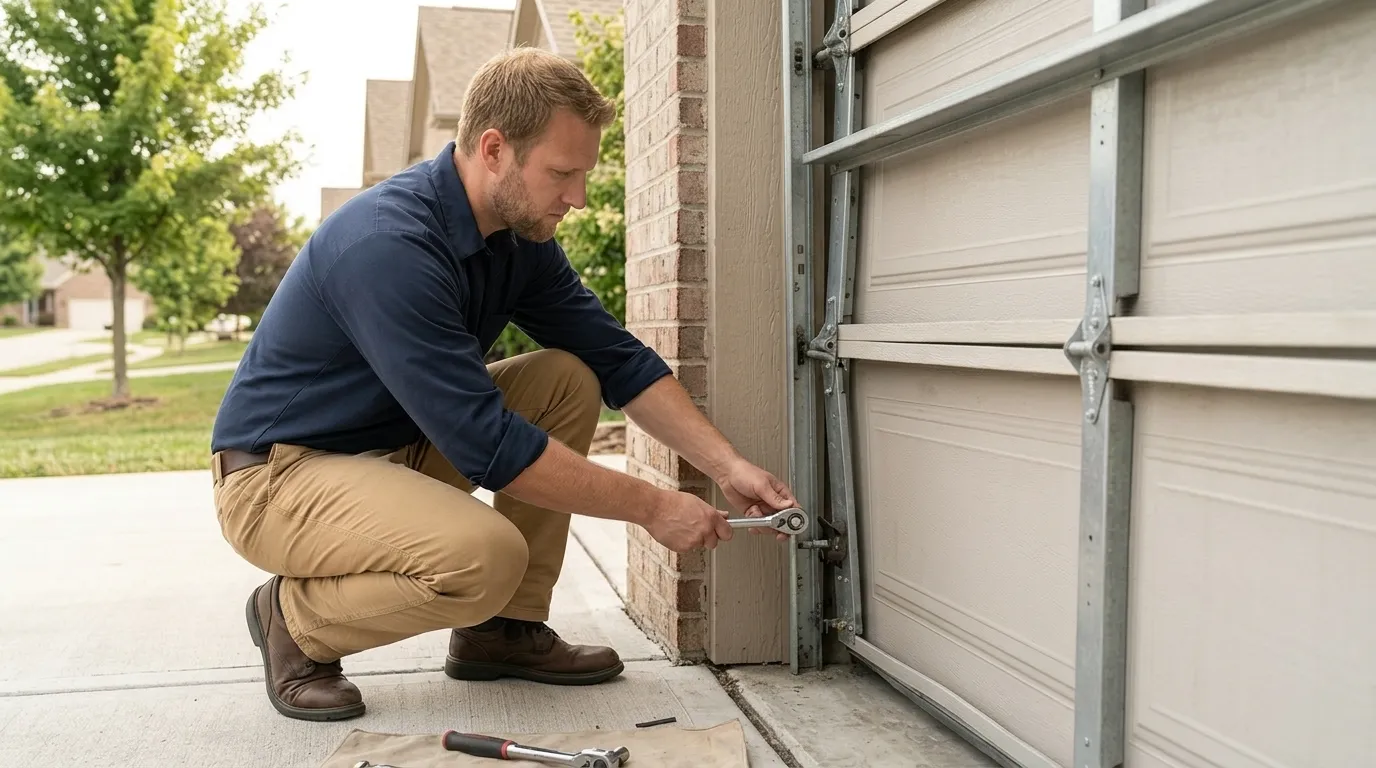
Next we look at the track alignment. Fifty years of settling and seasonal heat expansion can pull brackets loose from the framing, and a door that looks fine sitting shut can be dragging hard against one side of the track when it moves. We shim and re-square before touching the opener.
For the opener itself, if the motor is original to the house it's almost certainly a chain-drive unit well past its expected service life, and parts for units that old are getting hard to source. In that case we're upfront that replacement is the honest answer rather than a repair that won't hold. We don't stock every discontinued opener part, so if yours is a rare model, we'll tell you that on the spot instead of promising a fix we can't deliver.
Time on the Job
A straightforward spring replacement on a single door usually runs under an hour once we're on site. Add a second door, a bent track, or an opener swap and you're looking at a longer visit - we'll give you a real estimate before we start, not after.
Houses in University Park are smaller households on average than the wider service area, and most garages here are single-car or a modest two-car setup, not the oversized three-bay doors you find in newer subdivisions. That keeps most jobs on the shorter end.
The one thing that stretches a job is parts availability for older hardware. If your door needs a bracket or drum size that isn't common stock, we may need to order it, and that can push a same-week job into the following week. We'd rather tell you that upfront than have you wait on a truck that shows up without the part.
How it works
From “it’s stuck” to “it’s fixed”
01
Tell us what’s wrong
Describe the symptom - won’t open, loud bang, opener runs but the door won’t move.
02
On-site diagnosis
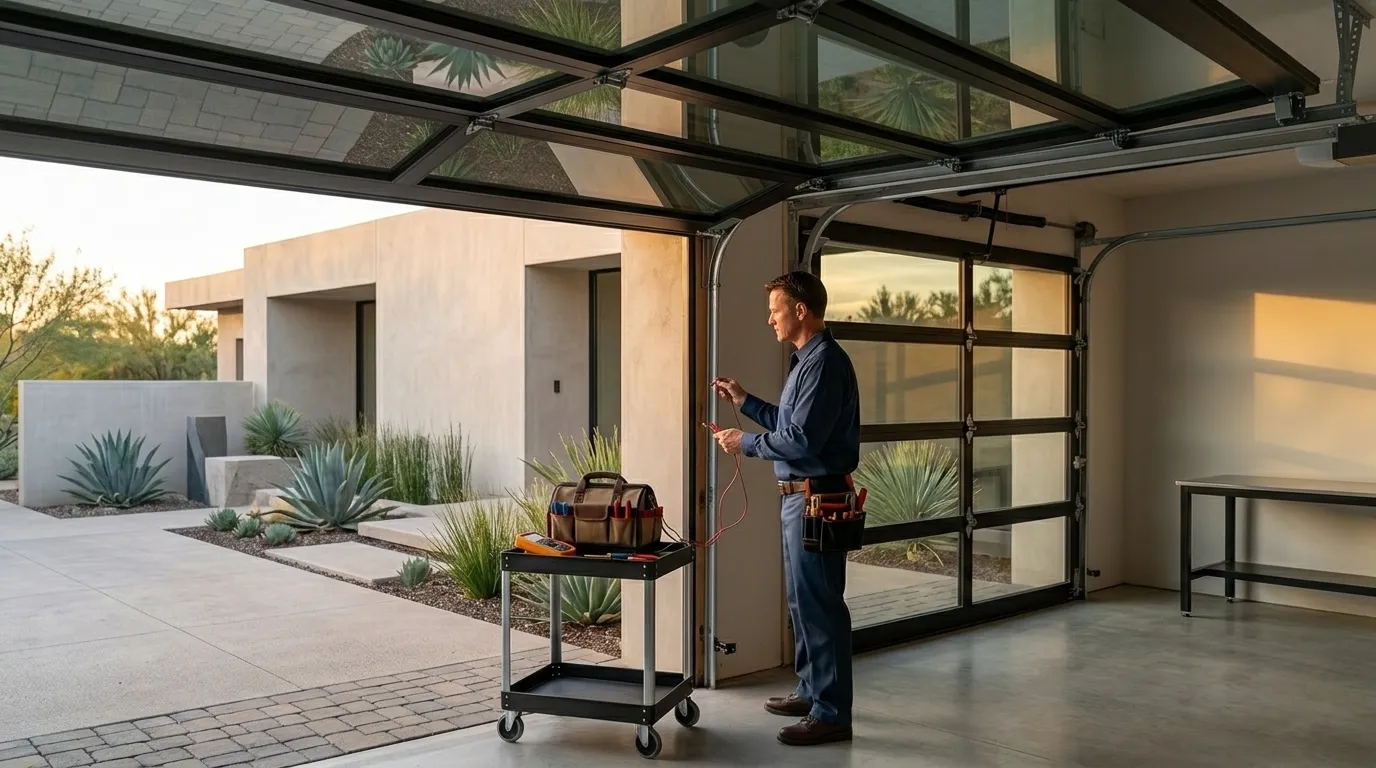
A technician tests the door under power and by hand and finds what actually failed.
03
Clear, up-front plan
You get the fix that’s needed and what drives the cost - before any work starts.
04
Repaired & tested
The repair is done, the door is set true and tested, and the work area left clean.
Next step
Serving Las Cruces, NM - tell us what your door’s doing and we’ll take it from there.
Why do garage doors in University Park break more than newer homes nearby?
Most houses here date to around 1973, so the doors and hardware are original-era steel with extension springs and nylon pulleys. Fifty years of severe summer heat dries out seals and pulleys and fatigues the springs, which is why breakage shows up here more than in newer construction.
Do you have a location in University Park?
No. We run every job here out of our Las Cruces base, about 4 miles away. That's true for repair calls and full door replacements alike - there's no separate branch, just a short drive.
Is it worth replacing an opener from the 1970s instead of repairing it?
Usually yes. An original chain-drive opener from that era is past its expected service life, and parts for it are getting scarce. We'll check the motor and gearing first, but if it's original to the house, replacement is typically the more honest recommendation.
How long does a spring repair take?
A single-door spring replacement usually takes under an hour once we're on site. A second door, a bent track, or an opener swap adds time - we'll quote the real number before starting, not guess at it over the phone.
Ready to get your garage door sorted?
Tell us what it’s doing and where you are in Las Cruces - we’ll take it from there.