
What Can Go Wrong
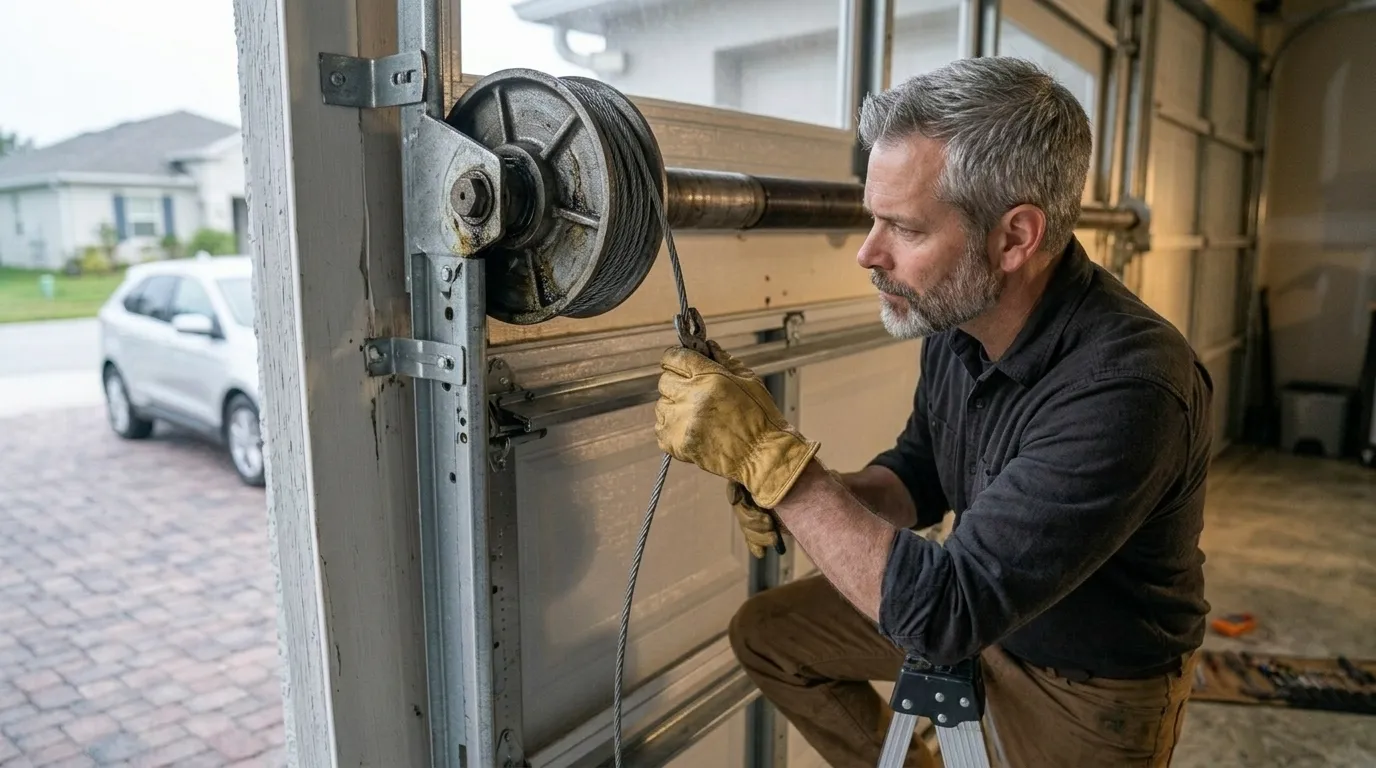
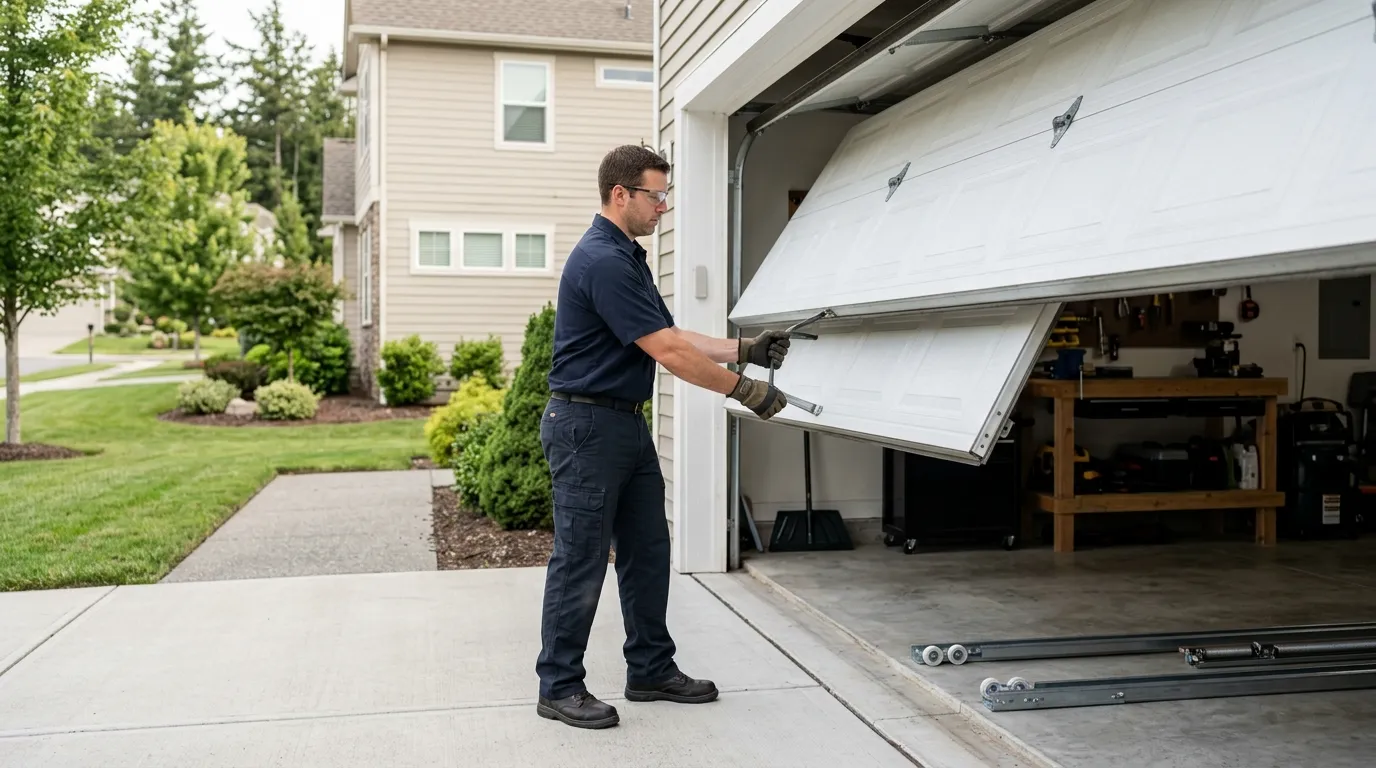
A frayed lift cable usually shows itself one of two ways: strands sticking out where the cable wraps the drum, or the whole cable jumping the track on the pulley and letting one side of the door drop. On the extension-spring systems common to Vado's build era, the cable also runs through a stationary pulley bolted near the header, and that pulley wears a groove into itself over the decades. A cable running in a worn groove frays faster than one running clean.
Rust is the other half of it. Original galvanized coating on 1980s cable wasn't built for forty years of thermal cycling, and once the coating cracks, the steel underneath corrodes from the inside where you can't see it until a strand pops. A door that looks fine one week can have a cable give out the next.
The one thing we won't do is patch a cable that's already shed strands. A spliced or re-tensioned cable under load is a hazard, not a repair - it gets replaced, both sides, so the door doesn't come back lopsided in six months.
Why This Fails Locally
Vado sits in a severe-heat climate band, and that matters more for cable than most owners expect. Heat cycling - hot slab, hot header, cold nights - works the cable's coating and the grease in the drum groove harder than it would in a milder area, which is part of why original cable from the 1985 era is failing now rather than holding another decade.
The numbers behind the town play into it too. Vado has around 930 households, a small enough base that most of the garage doors here are still original rather than replaced or upgraded. And with median household income near $29,844, a cable that's starting to fray often gets left alone longer than it should - owners wait for it to actually fail rather than replace it at the first frayed strand, because a service call has to compete with other bills. That's understandable, but a cable that gives out mid-cycle can drop a door hard, and by then it's not a cheap fix anymore.
How We Fix It
First we pull the door off its cable tension safely and check both sides - a cable failure on an extension-spring door almost always means the opposite side isn't far behind, even if it looks fine. If the pulley shows a worn groove, that gets replaced with the cable, not left in place to chew through new line.
We re-cable and re-tension the door to run level, then cycle it a dozen times watching the drum and pulley track before we call it done. On original 1980s hardware we're also checking the drum itself for rust pitting, since a pitted drum will fray a brand-new cable just as fast as the old one.
For anything else going on with the door while we're out there, our full service list is on the /garage-door-cable-repair-las-cruces-nm page. If you're just looking for what we cover in Vado generally, that's on /vado-garage-doors/.