Garage Door Openers and Power Outages in Las Cruces
Garage door openers on Las Cruces houses built 1969-2003 take a beating from severe summer heat. Here's when a stuck door means a call, and when it means a new opener.
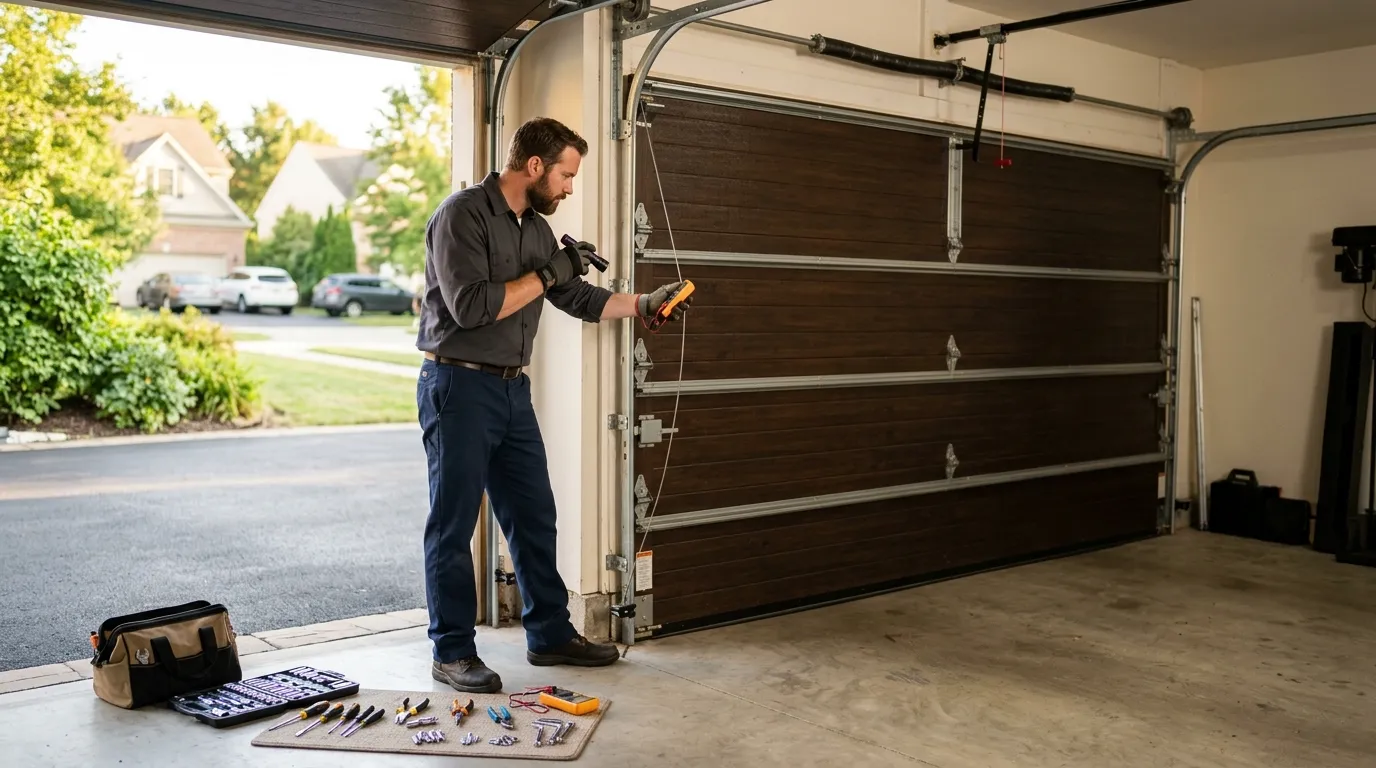
If the door stops halfway and the opener just hums, that's usually the motor pushing against something it can't move - a jammed track, a broken spring taking the load off the opener, or a logic board that's already partly cooked. Don't keep hitting the button. Every extra try burns the capacitor a little more.
If the power flickers or cuts and the door won't respond at all afterward, pull the manual release cord and work the door by hand until someone can look at the opener itself. A lot of the units still running in this area went in when these houses were built, and a unit that old doesn't always come back clean after a hard power cycle. Sparking at the outlet, a breaker that keeps tripping just for the garage circuit, or a smell of hot plastic near the motor housing - those are calls, not wait-and-see situations.
We do house calls for stuck doors and dead openers. We don't do same-day miracle parts for boards nobody stocks anymore - some of the older chain-drive units need a part that has to be ordered, and that's a real wait, not a brush-off.
The Situation
Houses in this service area were mostly built between 1969 and 2003, with the median landing around 1986, and the bulk of that stock - spread across seven named pockets of town - is 1980s and 90s construction. That matters for openers because a house framed in 1986 likely got its garage door opener installed around the same time, or close to it, and a lot of those original units are still bolted to the ceiling joist today.
Of the roughly 3,349 households across the area we work, about 1,317 are owner-occupied houses, and that's where most of our opener calls come from - not rentals, not new builds, but the same family running the same door for decades. With median household income here around $50,000, most people want the opener fixed, not swapped, and a lot of the time that's the right call. A blown capacitor or a bad sensor is a repair. A fried logic board on a unit from the Reagan era is usually not.
What the Weather Here Does to It
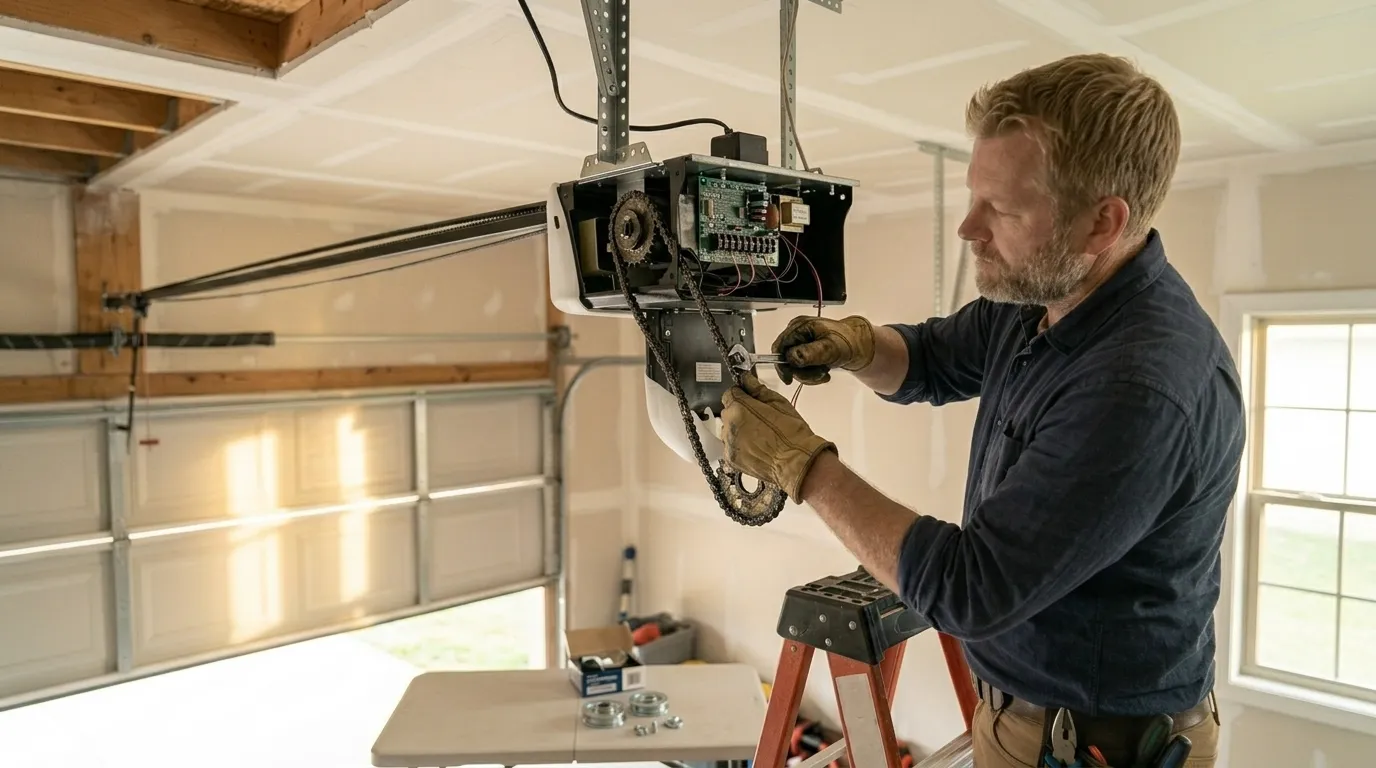
This area sits in a severe heat band, and that's the single biggest thing working against your opener. The motor housing hangs a foot or two below an attic that's been soaking up sun since morning, and by afternoon the air around that circuit board is well past anything the manufacturer tested it for. Capacitors dry out faster in that kind of sustained heat. Logic boards drift and misfire before they die outright - you'll see a door that opens fine at 7am and refuses by 3pm.
West-facing garages take the worst of it, catching direct sun straight through the door skin for hours before the opener even starts its afternoon work. Power grid strain during the hottest stretches means brownouts and short outages are more common in summer than the rest of the year, and an opener that loses power mid-cycle, then gets a rough surge back, is exactly the kind of stress that kills a board that was already weak.
The Seasonal Bit
The calls cluster hard in the hottest months. That's not coincidence - it's the same board that's been running fine since spring finally giving out under sustained heat load, often right after a brief outage or brownout during peak demand. If your opener has been acting up in cooler months and you're heading into another stretch of severe heat, that's the window to get it looked at before it fails on a day you actually need the car out.
Here's the honest limit: we can't always save an old board. If the unit is original to a house built decades back and the logic board has taken repeated heat and surge damage, a repair might buy you a few more months at best. At some point replacing the opener costs less than chasing the same failure twice a year. We'll tell you straight which side of that line you're on instead of running the meter.
How it works
From “it’s stuck” to “it’s fixed”
01
Tell us what’s wrong
Describe the symptom - won’t open, loud bang, opener runs but the door won’t move.
02
On-site diagnosis
A technician tests the door under power and by hand and finds what actually failed.
03
Clear, up-front plan
You get the fix that’s needed and what drives the cost - before any work starts.
04
Repaired & tested
The repair is done, the door is set true and tested, and the work area left clean.
Next step
Serving Las Cruces, NM - tell us what your door’s doing and we’ll take it from there.
Why does my garage door opener only act up in summer?
Heat is the main driver. Circuit boards and capacitors sitting in a garage under an attic that's been baking all day run far hotter than they're rated for, and that stress shows up as misfires, delayed response, or outright failure - especially after a brief power outage or brownout during peak demand.
Should I replace my opener or just fix it?
Depends on the part that failed and the age of the unit. A bad capacitor or sensor is usually a straight repair. A logic board that's failed more than once on an opener installed decades ago, when a lot of these houses were built, is often a sign the whole unit is at the end of its run.
What do I do if the power cuts out while the door is halfway open?
Pull the manual release cord - it's usually a red handle hanging near the trolley - and move the door by hand. Don't force the opener motor once power returns until someone's checked whether the cycle interruption damaged the board.
Do you work on older openers, not just newer models?
Yes. A lot of the houses we service were built between 1969 and 2003, and plenty still run their original openers. We can often repair those, though parts for the oldest units sometimes take longer to source than for a current model.
Ready to get your garage door sorted?
Tell us what it’s doing and where you are in Las Cruces - we’ll take it from there.