Why Garage Doors in Las Cruces Fail the Way They Do
Las Cruces homes built mostly between 1969 and 2003 carry original springs and openers that fight a severe-heat climate every summer. Here's what actually fails and why.
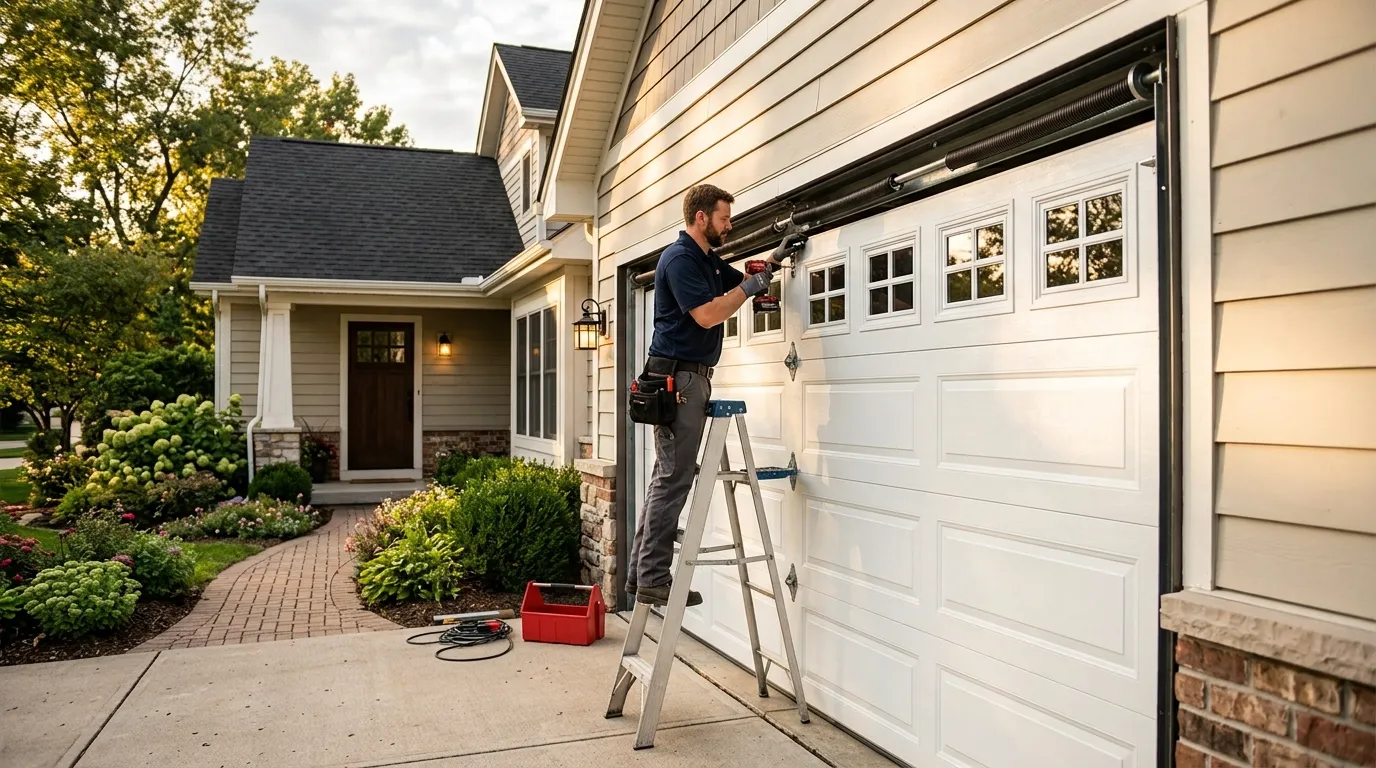
Call before the door is stuck, not after. A spring that's starting to go usually tells you first: the door feels heavier on the way up, the opener strains and clicks instead of running smooth, or the door drifts down a few inches after you thought it stopped. Any of that, stop using the door and call. A door that's fully down and won't budge with a snapped cable or a broken spring is a two-person, right-tool job - the torsion spring alone can put someone in the ER if it's forced open by hand.
What we don't do: same-day replacement of every part on the truck. Some opener boards and certain spring sizes take a few days to get in, especially on doors old enough that the original hardware isn't a stock size anymore. If your door was installed anywhere in that 1969-2003 window that covers most of this area, tell us the age when you call - it changes what we bring on the first visit.
If the door only misbehaves in the worst heat of the afternoon and works fine by evening, that's still worth a call. It's usually a sign the metal or the electronics are already near the edge, and severe heat is just the thing tipping it over.
The Situation
Housing across the areas we work went up mostly between 1969 and 2003, with the median right around 1986, and it's concentrated across seven named pockets of the metro rather than one uniform subdivision. That means the garage door hardware out there isn't one generation - it's a spread of torsion and extension setups, some original to the house, some replaced once already by a previous owner.
With 3,349 households in the service area and 1,317 of those owner-occupied houses, a lot of the calls we get are from people who bought the house, not the door - they're the second or third owner of whatever spring and opener came with it. At a median household income near $50,000, replacing a whole door system isn't an easy call to make on a Tuesday, so a lot of owners here want the repair option looked at seriously before anyone talks about a new door.
That combination - older average hardware, mixed ownership history, and a household budget where a full replacement is a real decision - is why we spend time on the phone asking the age and symptoms before we say what it'll take.
What the Weather Here Does to It
This area sits in a severe-heat climate band, and that's the single biggest thing working against your door year-round, not cold. Steel torsion springs lose temper faster under sustained high heat, and the grease packed into them and into the rollers thins out and runs off sooner than it would somewhere milder. That's not a one-summer problem - it's cumulative, and it hits hardest on doors already in their second or third decade, which describes a large share of the stock built in that 1969-2003 stretch.
Opener logic boards and sensors don't love it either. A garage that spends afternoons well above what the electronics were rated for will shorten the working life of the board, and we see that show up as an opener that runs fine in the morning and struggles or throws errors by late afternoon.
The honest limitation here: we can't reverse heat fatigue in a spring. Once the temper's gone, lubricating it buys a little time, not longevity. On an older door already showing that kind of wear, replacing the spring set is usually the actual fix, not a patch.
The Seasonal Bit
Summer is when the heat-related failures show up hardest, because a garage that's already the hottest room in the house gets hotter still, and every piece of steel and every plastic gear in there is baking for months, not days. That's the season we get the most calls for openers that suddenly stop responding to the remote or a door that starts sagging on one side.
Owners in the older stock - anything from the 1980s or 90s wave that makes up most of what we see - are the ones most likely to be running original springs that have now taken twenty or thirty summers of that heat load. If your door falls into that age range and you haven't had the spring tension checked in a while, doing it before the hottest stretch of the year beats doing it after something snaps.
We serve the area from Mesilla and University Park, both about four miles out, to Mesquite and Radium Springs further out at twelve, and the same heat-driven wear shows up across all of it - the climate doesn't change house to house, only the age and condition of what's already on the door.
How it works
From “it’s stuck” to “it’s fixed”
01
Tell us what’s wrong
Describe the symptom - won’t open, loud bang, opener runs but the door won’t move.
02
On-site diagnosis
A technician tests the door under power and by hand and finds what actually failed.
03
Clear, up-front plan
You get the fix that’s needed and what drives the cost - before any work starts.
04
Repaired & tested
The repair is done, the door is set true and tested, and the work area left clean.
Next step
Serving Las Cruces, NM - tell us what your door’s doing and we’ll take it from there.
How do I know if my spring is original to the house or already replaced?
Look at the coil for a manufacture sticker or a noticeably different finish than the rest of the hardware - a mismatched spring color or a newer-looking cable often means someone already swapped it. If you bought the house and don't know its age, tell us when the house was built; in this area that's commonly somewhere between 1969 and 2003, and it helps us guess at spring size before we arrive.
Why does my opener act up specifically in the afternoon?
Heat is the likely cause. Circuit boards and sensors in this severe-heat climate can run fine in the morning and start throwing errors once the garage bakes through the afternoon. It's a sign the board is nearing the end of its tolerance, not a one-off glitch, especially in an opener that's already several years old.
Is it worth repairing an old spring or should I replace the whole set?
If one spring on a double door has failed from age and heat fatigue, the other is usually close behind - we generally recommend replacing both at once rather than waiting for the second to go. On a single door with one spring, a straight replacement of that spring is usually enough if the rest of the hardware checks out.
Do you install same-day for a broken spring?
Often, yes, for common spring sizes. Some older doors from the 1969-2003 range use sizes we don't carry standard on the truck, so we may need a day or two to get the right part. We'll tell you on the phone once we know the door's age and rough dimensions.
Ready to get your garage door sorted?
Tell us what it’s doing and where you are in Las Cruces - we’ll take it from there.